Mostrando las entradas con la etiqueta Social Impact. Mostrar todas las entradas

2017/02/20

First Book: A Novel Model for Social Enterprises


MIC LISTEN TO THE PODCAST:

First Book founder Kyle Zimmer talks about the hybrid model that's key to the nonprofit's success.
In the early 1990s, Kyle Zimmer was a practicing attorney who spent her free time volunteering at a soup kitchen in Washington, D.C. Working with struggling families made her realize that many children do not have access to new, high-quality books, which are the building blocks of education. She did her research, came up with a plan and launched First Book, a social enterprise that has distributed millions of books and other items to children in need.
But it’s not run like most nonprofits. First Book charges a small shipping fee per book that covers the operating cost of its book bank and it adopted atypical publishing terms so it could buy books at a discount. 
Zimmer spoke to Katherine Klein, a management professor and vice dean of the Wharton Social Impact Initiative, about the hybrid business model First Book has adopted that was key to its success.
An edited transcript of the conversation follows.
Katherine Klein: I think of First Book as one of the most impressive nonprofit social enterprises I know. You’ve been at it for a long time and are passionate about continuous improvement. How do you describe First Book?
Kyle Zimmer: We are a nonprofit social enterprise. At the highest level, we’re dedicated to equal education. We focus on fixing the lack of physical resources in any space serving children in need, ages zero to 18. We provide books, computers, winter coats when they’re needed — anything that is a barrier between kids and an equal shot.
Klein: Books were the initial starting point. Is that the major focus of your work? What’s the balance when you talk about these other resources?
Zimmer: Books are always the heart of First Book. In fact, we were delighted last year to hit 160 million books distributed over the lifetime of the organization. Last year, we did about 18 million or 19 million books through our system in a single year, and it’s growing 20% a year.
Klein: Who are these books going to?
Zimmer: They go into the hands of anyone serving children in need. It can be the most informal teen drop-in center. It can be a Head Start program. It can be a WIC clinic, a church basement, a barber shop where they’re doing outreach to get neighborhood kids reading, a Title I or Title I-eligible classroom. It’s a gigantic range.
“I was raised by people who believed deeply that education was the road to equality.”
Klein: The name First Book suggests this may be the first book in a kid’s life or in the home. Why First Book?
Zimmer: I fell in love with a poem by Rita Dove that’s called “The First Book.” That’s where the name came from. It has to do with being the first book that really grabs you and turns you into a reader.
Klein: You founded First Book 25 years ago after making the jump from a career as an attorney. What I’ve seen in my role in the social-impact world is that plenty of people have a larger sense of purpose, but they don’t take the plunge. How and why were you able to take the plunge?
Zimmer: I think that I took the plunge for two reasons. One, I was raised to focus on education. I was raised by people who believed deeply that education was the road to equality. To this day, I believe that it really is the next wave of the civil rights movement. That has always been at the core of who I am. When I started, I actually was practicing law. I went in the evenings to a soup kitchen. I just hung out with kids from the neighborhood. It was in the late 1980s, early 1990s. It was a tough period for Washington, D.C., a period of the height of the crack epidemic and very violent. These kids were doing everything right, coming in from a tough neighborhood, looking for adult intervention. I realized that even though I wasn’t a teacher, those hours could be a lot more productive if I just had books and could pull a kid onto my lap and start reading.
The lack of books in that setting set me on a trail of exploration. I started looking at schools in the neighborhood, what resources they had available, reading studies about it. One thing led to another. Like probably every social entrepreneur in the world, I have that split where my head is fundamentally private sector and my heart is social sector. I began to put together a business plan to understand the intricacies of the publishing industry and to start imagining how you develop an actual business plan that would fix the chasm.
Klein: I love how you put this, with the heart in the social sector and the head in the private sector. Another way people talk about organizations like yours is as hybrid organizations. They can be for profit; they can be nonprofit. But there’s a strong social mission and a revenue-generating model as well. How does that work in your case?
Zimmer: At this moment, we have two big jet engines. One is called the First Book National Book Bank. Fundamentally, it’s focused on books, but there are other products as well. It accepts large-scale contributions from really almost every major publisher in the United States and Canada. We take that inventory in, and we make it available through an online system to our expansive network of classrooms and programs who have signed up with us and are eligible to receive resources.
Klein: That is essentially a donor model, where companies are donating books and you’re distributing them.
Zimmer: Right. While that sounds more traditional in its design, the books remain free. But the people who receive them pay a shipping and handling fee. On average, it’s about 55 cents, 60 cents per book. What that fee allows us to do is not only pay shipping and the hard out-of-pocket cost, but it allows us also to pay 100% of the costs related to running the National Book Bank. It’s completely revenue-neutral for the organization. That places 14 million books a year, something like that. It’s a powerful engine.
The second engine is called the First Book Marketplace. About 10 or 11 years ago, we realized that although we loved the Book Bank — it’s wildly efficient and places enormous quantities of books and resources out there — what it doesn’t do is fix the problem for publishing. Publishing is a consignment industry. What that means is that they know that when they hit the print button every year on whatever titles they select, 25% to 30% of that inventory is coming back to them. That means that they elevate the price at retail to reflect that. So, we have a market now where a premium picture book for kids in the U.S. runs just a hair over $18.
“Like probably every social entrepreneur in the world, I have that split where my head is fundamentally private sector and my heart is social sector.”
You have an entire publishing industry that really has a market restricted to about the top 5% of the U.S. socioeconomic ladder. That’s not good for the industry. No one wants to have that kind of constriction. We went to them and said, we are going to crack open the bottom of the market for you. We will aggregate the market. We will take care of talking to them so there will be no advertising costs. And we will buy, for the first time ever, on a non-returnable basis, which took the consignment risk off the table.
We now offer about 6,500 titles. The average price of a picture book through us is $2.85, and it includes shipping. Sometimes they are hardback, and the cost is a little higher on those. We change format sometimes to keep the costs so it’s accessible. But it also works for the publishers. It’s a brand new market, and they’re still making money on those sales.
Klein: How are the recipients paying, whether it’s a community center or school system or the local barber shop?
Zimmer: It depends on the program. Sometimes, it’s Title I funds, which are governmental funds. A lot of times, what we know is about 90% of teachers in the United States take money out of their own pocket to pay for resources in their classroom. If you’re a teacher at a Title I school, the needs are so high that First Book believes that none of those people should be, first of all, paying for it themselves, but secondly, paying $18 per book.
Whether they’re out of their own pocket, whether they’re school funds — sometimes it’s local foundations or affluent folks who come to the table and recognize the need — it’s a huge range. All we care about is making sure that every dollar that comes in pushes the maximum number of resources out the door.
Klein: With your model, it sounds like you’re not experiencing a tension between the revenue-generating aspects of the model and the social impact. The more books that are getting donated, the more books that you’re selling, the more books you’re contracting, the greater your impact. That’s not always the case. Do you have advice for others who are looking for a successful hybrid model where you get that win-win?
Zimmer: I do think that we’re particularly fortunate to have our model directly on point with our mission. If I were advising somebody to design one, what I would suggest is a couple of things. One, I’m a big believer in writing a business plan. It may sound old fashioned, it may sound boring. But what you need to do is sit in front of your computer and make sure that you can clearly articulate exactly what you intend to do and exactly what the risks are. And you need to do it fearlessly. Ask yourself every tough question.
Young people who are trying to start social enterprises need to step out and ask for help. I talk to a lot of classes and a lot of young people. They have MBAs from great programs like Wharton. They’re still worried that they don’t know enough. They don’t know enough about logistics or whatever the topic is. I think that the best minds recognize that team leadership is the way to go, and that you’re never going to know enough. Even if you do when you start it, within six months you’ll be facing challenges that you really couldn’t even foresee. So, you need to routinely get yourself in the mode of reaching out, asking for help. Ask people you know will give you great advice, but who will also ask you the tough questions so that you don’t run the risk of falling so in love with your design that you lose track of your business model.
“About 90% of teachers in the United States take money out of their own pocket to pay for resources in their classroom.”
I think there are lots of wonderful models where they don’t have the alignment. I do think the centerpiece of that is refined thinking, forcing business practices, forcing yourself to answer the tough questions.
Klein: Many organizational leaders will struggle from their positions as CEO and founder to get real information. How do you get that bottom-up information?
Zimmer: I think we have really worked hard on this at First Book. It’s multilayered. We believe deeply in team leadership. There’s no one head of the organization. It’s a team of four people. We have enormous faith in each other, and that sets a tone because the rest of the organization watches how we interact. They see that Jane [Robinson], the CFO, or Chandler [Arnold, the COO,] or Dan [Stokes, senior vice president of administration,] ask me very difficult questions. I may come up with what I believe is a completely genius idea, and they will shoot it down pretty aggressively. With great caring and great humor, but the interaction is very clear. It emboldens people and teaches them that it’s OK to question. That’s one thing.
I think a second thing is, we really do focus on how we interact at meetings with our team. For example, I’ll present an idea and say to a junior person, “Tell me three things that you love about my idea.” They’ll stand up and come up with three things. Then I’ll say, “Now tell me three things that you hate about my idea.” Usually, it’s so playful that you’ve lowered the barrier and they feel as though they can step forward.
By the way, I think that’s critical. Not just with our internal interactions, but I also think it’s critical for our relationships with corporations. We often have almost identical conversations with the companies that support us because it’s hard sometimes for them to feel like they can be critical of their nonprofit partners. That’s the most important thing they can do for us.
Klein: As the social impact space has evolved, as social enterprise models have evolved, there’s a big focus on data. How are you using data, whether to guide your strategy and your projects or to assess your impact?
Zimmer: We use data every single day at First Book, and we use it in a lot of different ways. From an impact perspective, we survey our recipient groups routinely. In fact, we just closed a pretty large-scale survey and got some wonderful responses. We found that 88% told us that the books that we provided helped them close the achievement gap, and 87% said that they noticed an increase in interest in reading from the children they served as a result of having new books and resources. My favorite number out of the whole thing is that 79% of the teachers we serve came back to us and said that they felt First Book resources gave them the ability to be the best educators they could be, which is fabulous because these are people who are working on the frontlines in very difficult situations.
We also look at other kinds of data. We do focus groups routinely with the people we serve. We get all kinds of feedback from them about what they need, but also what keeps them up at night. What are they worried about in the lives of their kids? We get tremendous input from that. We look at the macro level through data. We are constantly monitoring, how big a buyer are we in the publishing industry? If we’re really about trying to invert the market for publishers, how close are we to doing that? I’m happy to report we’re one of the largest specialty buyers of most of the major publishers in the U.S. now, which is terrific. But we watch those numbers so we know what our impact is at the macro level.
“Young people who are trying to start social enterprises need to step out and ask for help.”
Klein: That makes me think of the times when you’ve talked to me about your impact on publishing. Is First Book changing the publishing market, what gets published and for whom?
Zimmer: I think we are, in small ways, right now. We’re taking bigger and bigger steps in that. I believe that a couple of things have happened. I think that we have opened the eyes of traditional publishers to the fact that there’s another market out there that they haven’t served. I believe that they have been more deliberate in the choices they’ve made about the cultural identities of authors they back because they know that First Book will be there as an open market to them.
Let me give you an example. Almost everybody knows Goodnight Moon. I’ve read that to my own kids a thousand times. There was an English version and a Spanish version. Our network responded to us and said, “Don’t make us buy both. We really need a bilingual edition.” We learned that there wasn’t one, so we went to the publisher and said, “How about if we buy 30,000 copies?” Of course, that was welcome news to the publisher because it’s non-returnable. It’s all great. When we did that, that had never been done before. Because when you’re selling it to a retail market, at the high end of the market, if they need both, they just buy both copies. I think we’ve been through 115,000 copies of that book now. Now it’s available at retail, but it wasn’t before we began that.
Our work for Stories For All is a program at First Book that focuses on cultural diversity, which is a dramatic need in children’s literature, in the U.S. especially. We have really held hands with publishers and said we will buy the first 10,000 copies of books that we hand-select before they are ever chosen by the publisher. That enables the publisher to take a gamble on an author that they might not be as confident about the retail market for because they know that the first 10,000 are out the door.
Klein: What are you thinking about for the future? Maybe a puzzle that you haven’t quite cracked or a new venture?
Zimmer: This is my favorite part of my job. We have several big plans underway. One is recognizing that not only are we focused on publishing, but we’re focused on what are the resource needs that are barriers for these kids. We’ve already stepped out, as I said, in winter coats and hygiene kits for homeless children, and many other areas.
What we’re realizing more and more is that not only has the publishing industry been designed really to only serve the upper veneer, but so is the retail industry. It’s not anybody’s fault. They are victims of their own market design. They’re victims of their own business strategy. Now we have a gigantic and growing number of families who are at the very bottom of the poverty ladder, and these are people who can’t afford diapers. They can’t afford books. They can’t afford school supplies. They can’t afford the very basic items that allow you to raise a child in a healthy environment.
We’re looking at them and saying, “What’s our role in that?” We have some strategies underway for that. We are also working on developing a research arm. We have 300,000 members of our network, and they have big opinions and share them with us very openly. With that, we’ve realized we have a unique opportunity to really harness the voice of people who are serving kids in need. We’re beginning something called First Book Insights that we’re looking at launching this next year.

2016/07/11

Losing Our ‘Tribe’: The Cost of Today’s Divided World

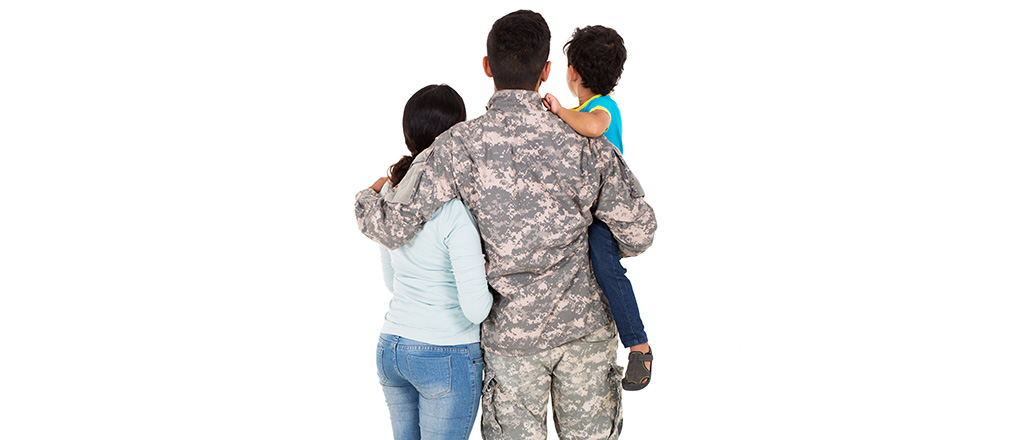
tribeFor many years, the slogan for the largest branch of the U.S. military was “An Army of One.” But in fact, when our armed forces deploy, they move in units that are essentially tribes: small, tightly knit, fraternal and supportive in a way that resonates with human instincts crafted over hundreds of thousands of years, according to journalist Sebastian Junger in his new book, Tribe: On Homecoming and Belonging.
It’s only after our soldiers get back home from war that they become armies of one: isolated and disconnected in the same way that many are in the modern world, but much more so as a result of  experiences that civilians can never fully understand. And that’s leading to mental health and social issues among the soldiers returning from today’s conflicts. 
Junger’s new book examines modern Western society through the lens of those returning soldiers to point out the downsides of our culture of independence, explain why disasters and dangerous situations bring out the best in us, and show how a few fairly simple enhancements to our civic life could make a big difference to the mental health of veterans and civilians alike. He joined us  on Wharton Business Radio on SiriusXM channel 111 to talk about it. (Listen to the podcast at the top of this page.)
 An edited transcript of the conversation follows: 
Knowledge@Wharton: This is an interesting book. The backstory plays off an article that you wrote for Vanity Fair a year or so ago, correct?
Junger: Yes, I started this idea about a year ago inVanity Fair. I thought that one way of understanding, not just America, but modern society in general throughout the world, is to look at it through the eyes of people who are returning to it and seeing it with fresh eyes. Of course, veterans are a great example of that, as are Peace Corps volunteers and some other people. The transition from an arguably harder circumstance to the luxury of modern society — the fact that that transition is actually hard rather than — says a lot about what is missing in modern society. As you said, it greatly affects veterans who might be struggling with psychological issues.
Knowledge@Wharton: What are the majority of Americans missing in terms of their understanding of what these people are going through and helping them re-acclimate themselves to this society?

Junger: Humans evolved to live in groups of 40 or 50 people in a harsh environment, totally relying on one another for their safety and for their emotional needs. Obviously, modern society doesn’t exist like that anymore, and there’s a great loss in that. If you look at mental health rates, the suicide rate goes up with income. As societies get wealthier, the suicide rate climbs. The rate of depression climbs. All these things climb with income. As societies get wealthier, people live more and more individualistic lives, and that actually leaves them psychologically very vulnerable.
 “The transition from an arguably harder circumstance to the luxury of modern society — the fact that that transition is actually hard rather than easy — says a lot about what is missing in modern society.”

So you have veterans who have spent a year-plus in a platoon, which is about 40-50 people. It basically reproduces our evolutionary past very closely — living in close proximity, sleeping together, eating together, doing everything together. It doesn’t matter if you were in combat or not. Most soldiers are not in combat; most soldiers actually are not traumatized. But they’re living in these incredibly close, cohesive, tribal circumstances. It feels very good for ancient reasons.
Then, they come back and suddenly they are alone, and they are actually in some ways more vulnerable psychologically than they were on the battlefield.
Knowledge@Wharton: The majority of those returning soldiers would have family members, but that doesn’t create the sense of bring in a tribe like being in a platoon, correct?
Junger: Yes. Family is great. It’s very important for psychological health, but community really is the key.
You can tell that by looking at rates of psychological illness in modern society. Most people do live in families, and it really doesn’t buffer them. What does buffer people is community. If you take modern society and you collapse it — for example, during the Blitz in London, when you had strangers sleeping shoulder-to-shoulder on subway platforms, forming bucket brigades to put out fires and burning buildings, terrible, huge causalities — you would think that would be psychologically very stressful. It was actually the opposite. The admission rates to psych wards in London went down during the bombings. As people come together even to face great hardship and danger, essentially, they feel better and they do better.
Knowledge@Wharton: Looking at our society now, it’s really only in times of great tragedy or great stress that we really do come together – for example, in the wake of 9/11.
Junger: Interestingly in New York, the suicide rate went down and the murder rate went down after 9/11. Some kinds of psychological illness improved across the population. We’re very lucky to live in an affluent society where individuals don’t need their community to get by; they’re drawing a paycheck, they have a car, they live in a house. They don’t need their immediate community. And the community doesn’t need them — until a tornado comes through, until the floodwaters rise, until a plane crashes into a building. We’re all leading these separate lives, which gives us enormous autonomy.
It’s not that it’s without its benefits, but there’s a real psychological price to be paid. Veterans are making this radical transition from a very tightly bonded life to modern life, and it’s extremely hard for them. And keep in mind, only 10% of the military has ever experienced combat. Most of the people coming back were not traumatized at all, and yet almost half the military has applied for PTSD disabilities. So there’s something going on that doesn’t have to do with trauma that’s still deeply affecting these people making the transition.
Knowledge@Wharton: You talk a bit in the book about how these men and women coming back after serving for our country are, in many respects, viewed by communities as damaged goods.
Junger: I wouldn’t say “damaged goods,” but there’s a bit of a culture of victimhood that I think both sides play into, which I think is really damaging to the efforts by veterans to reintegrate into “normal society.” When you’re viewed as a special case, when people are sort of tiptoeing around you verbally, and when they don’t know what to say — do I say, “Thank you for your service,” or do I say nothing?  When you’re treated with kid gloves, I think it’s very hard to reintegrate into society.
“As societies get wealthier, people live more and more individualistic lives, and that actually leaves them psychologically very vulnerable.”
Knowledge@Wharton: We did an interview right around Memorial Day with PwC, and the person we had on was a former military member who runs a program for PwC to help former military members become part of that company, and ingrain them in it. How much of a benefit are those types of programs? Do you see them in any way easing the issues that you’re talking about?
Junger: What I would say is that the things that help veterans help everyone. I think in some ways, we should eventually stop just talking about veterans. Veterans need exactly the same things that everybody needs.
People need work, and veteran or not, if you don’t have a job, your psychological health is really at risk. People need community. Veteran or not, if you don’t have community, you’re at risk psychologically. So when we talk about helping the veterans, the bigger conversation is, how do we save ourselves? How do we change society so that it’s psychologically healthy for everybody?
Veterans in some ways are not a special case. I mean, they are, but they’re not. They’re emblematic of something that we all face. I start my book with Pontiac’s Rebellion in the 1760s in Western Pennsylvania, and one of the extraordinary things about that — and this was played out throughout the history of America — was that white captives of the Indians who had been taken from the settlements by force and adopted into Indian tribes, when they were given the chance to be repatriated to white society because of peace treaties and things like that, many of them refused to go.
They wanted to stay with their adopted tribal families. I look at that and I ask, what is it about our civilization that’s so unappealing to people, even to people raised in our civilization? It’s a really interesting question.
Knowledge@Wharton: It looks like we’re going to continue to grow even farther apart, considering how things have developed over the last 30 to 40 years. With all the technology we have, and the ability to avoid speaking directly with one another, I think we’re actually continuing down this path even more.
Junger: Yes. I don’t talk at all about social media in my book, but I think you’re exactly right. I have a flip phone, by the way. But I walk around looking at people on their devices, and it’s sort of amazing to me. Again, I don’t talk about this in the book, but now that we’re having the conversation, I can say that in my opinion, the danger of social media is not that it doesn’t provide community. It’s that it doesn’t provide you community, but it gives the illusion that it does. It’s even worse than no internet at all in some ways because it seems like you belong to something, but you actually don’t. You are literally interacting with pixels on a screen. I mean, when you really look at it, you’re in your parents’ basement interacting with pixels. You’re not actually having a human exchange. That, I think, is very, very tricky for us just in evolutionary terms.
Knowledge@Wharton: Are there examples out there right now … of areas where there is still that tribal mentality of community, of truly being a part of a greater entity? Other than Native Americans?
Junger: Native American culture has been radically damaged by many social ills that came from its contact with white society. But still, on many of the Indian reservations in this country, they have ceremonies for bringing veterans back into the community from the wars overseas from Iraq and Afghanistan. Those ceremonies are public. The whole community shows up, and they are extremely therapeutic. I talked to one woman from the Kiowa Nation who deployed to Iraq, and she said her whole community showed up in full regalia and drummed her out of town, and welcomed her home the same way. She was like, “I don’t have PTSD. I don’t even know what that is.” She basically deployed with her whole community, and that was fine.
Knowledge@Wharton: How much, though, do other countries follow that kind of path these days? You alluded to the fact that this has been almost washed out of our society in general, but do other countries still follow that type of path?
Junger: The problem with modern societies is that we don’t live in communities — we’re affluent enough to not need the community around us in order to survive. As communities get poorer, people depend on one another more and more. Rampage shootings have become the scourge of America in the past 10, 15 years, and they happen almost exclusively in pretty dispersed middle-class communities. A high-crime urban neighborhood has never ever had a rampage shooting in this country. There is something about the alienation of the American suburb, which somehow does not restrain psychotic individuals from turning violent.
Knowledge@Wharton: Going back to a point you made before — in situations where there has been high stress or some sort of military event, there is almost [easier] for military personnel to be in the battle or in that tribe. It’s easier for them than being back in society. It seems counterintuitive. But that ends up being the reality not only for a lot of these people, but for a lot of people just in general these days.
Junger: Yes, and again, keep in mind most soldiers are not in battle. They’re deployed, and they’re in support units, but regardless, they’re in very, very tightly bonded, cohesive situations — living, breathing, eating and sleeping with a group of 30, 40 people. Again, it’s exactly our evolutionary past and it feels good…. There was an earthquake in Arenzano, Italy that I researched and in Arenzano, in the rubble, the survivors basically made no distinction between rich people and poor people. Briefly, the survivors had a completely cohesive society, and one writer said that the earthquake produced what the law promises but cannot, in fact, deliver, which is the equality of all men.
“The danger of social media is … that it doesn’t provide you community, but it gives the illusion that it does…. It seems like you belong to something, but you actually don’t.”
I think one of the things that feels very good about disaster — and I saw this in New York City — is that when disaster strikes, everyone needs each other, and we stop making these awful social distinctions between white and black, rich and poor. We are just all one people because we need each other. That’s our evolutionary past, and in some ways, disasters that strike modern society in a weird way are kind of a relief.
Knowledge@Wharton: Do you believe we can change the course of where we’re going with society? Can we get back to something closer to where we were? I’m not sure when the high point of that “tribal living” ethos would have been here in the United States. Maybe in the 1950s, or further back?
Junger: To go back to tribal life in America, you have to go back to a pre-white context, I think. The agrarian society that we had in the 1950s is really a modern society. There were elements of it, though. World War II saw much, much higher casualties than the current wars, much more intense combat, but lower rates of psychological trauma. My guess is that’s because people, even then, were coming back to more cohesive neighborhoods. You were more likely to live in the town that you were born in, amongst your brothers and sisters, you were less likely to be dispersed the way we are today. That dispersal shows an incredible amount of autonomy and independence for individuals, which is great. But again, the down side — you don’t have a community, you don’t have that tribal connection, and your psychological struggles are going to be that much harder.
Knowledge@Wharton: There’s a line in your book that kind of jumped out at me: “Contemporary America is a secular society that obviously can’t just borrow from Indian culture to heal its own psychic wounds, but the spirit of community healing and connection that forms the basis of these ceremonies is one that a modern society might draw on.” That is something you probably would like to see happen in of a lot of situations, not only around the United States, but around the globe.
Junger: I’m so glad you brought that up. The one thing that I am very excited about — if you go to my website, SebastianJunger.com, there’s a page on it called “Veterans Town Hall.” We did this experiment in Marblehead, Massachusetts last year and it really worked. I had this idea that you could take this common element of Native American ceremonies for warriors, which is a cathartic retelling of what you did on the battlefield for your people. It’s a very common component of these ceremonies, a sort of dramatic reenacting, retelling of what you did. In the context of modern America, that would happen not in a ceremonial dance ground or something, but in the town hall, the city hall. The center of civic life in this country is the city hall, the town hall. Basically, every Veterans Day, you would unlock the town hall, and veterans of any war would have the opportunity for 10 minutes to stand up to a microphone and simply tell their community, which has come into the room to hear them, what it felt like to go to war.
You are going to have people who are very proud of their service. You are going to have people in a rage that they had to fight that war. You’re going to have people who are crying too hard to talk. You’re going to have all of it. But the beauty of that is that it returns the emotional experience of war to the entire community. And of course, it’s the whole community that sent these people off to fight in the first place. It’s an incredibly therapeutic thing to do.
And if you want to do one in your town, it doesn’t cost a dime. It’s so easy. Just go to my website. There’s a page that tells you how to do it. Basically, you get the doors unlocked on Veterans Day, you get the PA system turned on, you do some social media outreach, and you’re good.
Knowledge@Wharton: I would bet it is cathartic for a lot of the people involved.
Junger: It’s enormously cathartic for the veterans. But more than that, in some ways, it brings the community together. It makes the point that whether you’re pro-war, anti-war, Democrat, Republican, I don’t care, that we’re all in this together.
When people say, “I support the troops,” who knows what that means? It means absolutely nothing. But what it could mean is that once a year, for a couple hours, you show up and you listen to the stories of the people who have served this nation. You can do that as an anti-war pacifist and you can do it as an ardent patriot. It does not matter. This is not a political event — it’s a human event. What we found was it made the community in Marblehead very cohesive for a couple hours. If we did this all over the country, I think we might regain something that many agree has been lost during this campaign season — this idea that we are a nation. I think that’s almost coming into question now, and we need to do something.
Knowledge@Wharton: I did want to bring up at some point the fact that our political system continues to show that our focus is frequently not on the people, it’s on the entity of the President of the United States. And as we’ve seen, it’s more about tearing down than it is building up.
Junger: I make the point in my book that in tribal communities, because they depend on each other to survive, people have disagreements, they have disputes. People don’t like each other. It’s human society, so it’s a mess, of course. But the one thing that they don’t do is harbor contempt and derision for the people they depend on, the people inside the wire, as it were. You see that in platoons, also. There are plenty of problems in the platoon, but the one thing the soldiers do not do is mock the other soldiers in their unit that they might depend on for their lives. When politicians do that, when media figures do that, when powerful people are contemptuous and derisive of the president, of the government, of segments of the population — when you’re doing that to people who are inside the wire, basically, you are really undermining this country. And I say that whether you are a Democrat or Republican, I don’t care. There’s a code of conduct and it’s being violated and it’s extremely dangerous.

2014/12/04

Does Social Impact Demand Financial Sacrifice?

A growing number of social impact investment firms are onto their second or third funds, a reliable sign that the earliest funds had returns good enough to make their limited partners want to come back for more. SJF Ventures of Durham, North Carolina, has three; DBL Investors of San Francisco has two and is said to be raising a third; Catamount Ventures, also of San Francisco, has four, and Renewal Funds of Vancouver has two.
“When I see growing subsequent funds, it suggests they’re investing money successfully. It suggests the market likes what it’s seeing,” Twitter  says Brian Trelstad, a partner with Bridges Ventures, a social impact investment manager based in New York City and London with eight funds.
But, in the secretive world of private equity, a category into which most social impact funds fall, fund returns are generally not disclosed. As a result, the common assumption that an investor must sacrifice financial returns for the sake of achieving social progress goes uncontested.
Social impact investing — making investments to achieve social and environmental goals while at the same time earning financial returns — has been enjoying a groundswell of interest in the last several years. While arguably having started in the late 1960s when the Ford Foundation began making mortgage loans to African-Americans who were being redlined by banks, it has only begun to gain currency in the last 15 years. The term “social impact investing” itself was not widely coined until 2007.
In the last 10 to 15 years, the number of social impact funds has grown from a handful to several hundred. Since 2012 alone, the number of funds globally has increased from at least 206 to 316. Assets have grown from at least $13 billion to $23 billion, according to the Global Impact Investing Network (GIIN), an industry trade group.
This growth has occurred despite the widespread assumption that in making investments intended to achieve social objectives, investors are accepting more modest financial returns than they would if they were to choose investments solely on the basis of their return potential.
The idea that there is a tradeoff makes intuitive sense, according to researchers at Wharton who are doing research to answer this and related questions about social impact investing. “If you’re not only looking for financial gains, it implies that you’re almost necessarily sacrificing financial gain,” notes David Musto, a professor of finance, who is leading the research.
On the other hand, it is possible that the two objectives are entirely unrelated — that one factor does not affect the other. In the language of investing, it is possible that they are uncorrelated, says Katherine Klein, vice dean of Wharton’s Social Impact Initiative.
Or, there could indeed be a tradeoff, but if so, within the broad category of impact investing, there is likely to be a spectrum of opportunities, potentially enabling investors to choose where they want to be on the risk-return continuum, according to Christopher Geczy, adjunct professor of finance at Wharton and co-leader of the Wharton social impact research.
“When I see growing subsequent funds … [it] suggests the market likes what it’s seeing.”–Brian Trelstad
Finding answers to the tradeoff question could be very helpful to investors interested in achieving social impacts. It could also entice more investors to try what is sometimes referred to as “double bottom line” investing, which refers to the financial bottom line combined with social benefits.
“We hear over and over, ‘I need more data. Am I going to lose my shirt? Where are the opportunities in education, energy and elsewhere?’ Data would help with the skeptics,” says Kate Ahern, vice president of social innovation for The Case Foundation, which, in addition to making social impact investments, is working to promote the growth of such investing through education, policy change and network building.
Few Answers
But comprehensive answers to these questions are not yet available, according to the Wharton researchers. Considerable research has been done on the tradeoffs in what is known as socially responsible investing (SRI), a related form of investment. Although the various research efforts have reached different conclusions, several collations of that research have concluded that SRI investments achieve returns generally comparable to those of the overall market.
However, very little work has been done to assess whether, and if so to what extent, there is a tradeoff in social impact investing. The question demands its own research because despite some similarities, SRI and social impact investing are quite different, experts say. SRI investing has traditionally meant excluding from a portfolio of largely public companies those that are deemed to have undesirable characteristics from a socially responsible point of view — e.g., companies that pollute, mistreat employees or are not transparent in their governance. Some experts also exclude companies in industries such as armament manufacturing or tobacco, on the grounds that these are socially harmful despite being profitable. In contrast, social impact investments are made in companies whose mission is explicitly to create some positive social impact, such as improving access to clean drinking water, reducing malaria or improving the quality of education. Most of these companies are early stage, private companies while most SRI companies are public.
There have been several recent studies of performance in limited numbers of social impact funds. In 2013, the KL Felicitas Foundation published the results of an analysis of investments in a range of asset classes in its social impact portfolio, concluding that social impact investments could match or exceed market returns. Duke University’s Center for the Advancement of Social Entrepreneurship, in conjunction with Pacific Community Ventures and ImpactAssets, two non-profit proponents of impact investing, also last year announced the results of an examination of 12 funds that had met or exceeded their financial and social impact return objectives. And, JPMorgan in collaboration with the GIIN, has conducted annual surveys of impact investors for the past four years, collecting data on the investors’ level of satisfaction with financial and social returns (without gathering data on actual financial returns), their assessments of limitations in the marketplace, and where they were finding opportunities. In 2013, it surveyed 99 impact investors with $46 billion in investments.
Measuring Financial and Social Returns
Still, no comprehensive data on financial and social impact returns is publicly available.
“We hear over and over, ‘I need more data. Am I going to lose my shirt?’”–Kate Ahern
Cambridge Associates, an investment management and consulting firm, also in conjunction with GIIN, is currently conducting extensive research to develop a benchmark for social impact investments that it will make public, according to Jessica Matthews, the head of Cambridge Associates’ Mission-Related Investing Practice. The firm aims to collect financial performance data on hundreds of funds and their underlying investments. However, there will be no effort to assess the financial returns with respect to social impact investments in developing the benchmark, except to establish that the companies included meet the firm’s definition of a social impact investment, Matthews notes. As it has done in the past, its research on the social impact of investments will be used to advise clients, but will not be made public.
The Wharton study, in its second and final year, aims to survey all existing social impact funds, both U.S. and non-U.S. based, and use the data to help clarify the tradeoffs. Of 350 funds identified, 330 have agreed to respond to an extensive questionnaire seeking information about social and financial returns at both the company and individual investment level, the nature of agreements between general and limited partners, how companies measure achievements in social impact, how they ensure that their social missions are carried on after they are sold, and numerous other factors.
Like Cambridge Associates, the Wharton research will measure financial returns in terms of internal rates of return. Measuring social impacts is not so clear-cut. “Of all the difficulties [in assessing tradeoffs], understanding, monitoring and standardizing social impact are extremely challenging,” said Geczy.
Defining starting points, determining what has changed and pinpointing exactly what has caused that change requires extensive studies that demand time and resources well beyond what investment managers can undertake, according to Jacob Gray, senior director of the Wharton Social Impact Initiative. As a simple example of the complexity of making such measurements, imagine a company that provides bicycles to bottom-of-the-pyramid girls in Rwanda with the mission of improving their school attendance rates. Coincidentally, the government begins providing subsidies to families to help them pay school costs for their children. If school attendance rates improve during the overlapping investment and subsidy period, how would one determine to what degree the improvement was the result of the bicycles and to what degree it was attributable to the subsidies?
Where possible, Wharton researchers will use an existing rating system, the Global Impact Investing Rating System (GIIRS), which while not universally accepted, does quantify social gains. The rating system yields a single measure (in points, from 0-200) that is derived from the earning of points based on practices in four areas — governance, workers, community and environment.
Wharton survey participants who use the GIIRS rating system will be asked to report the difference in the GIIRS ratings of their investments at the beginning and end of the investment period. If they do not use the GIIRS ratings, they are being asked to describe if, and if so how, they measure the social impact of their investments.
“If you’re not only looking for financial gains, it implies that you’re almost necessarily sacrificing financial gain.”–David Musto
While investors are likely to be interested in whether there is a tradeoff between financial returns and social impact, whether or not there is a tradeoff is “probably not the most earth-shattering question” that the research will address, according to Gray. Beyond the binary tradeoff question, there is a great deal to be learned about how best to minimize risk and maximize financial returns while investing for social impact or, put another way, “Where are the best opportunities within social impact investing?” The Wharton research attempts to find answers to this question by looking at a range of factors.
For example, the researchers are asking to what degree women are involved in the management and governance of portfolio companies and to what degree the services or products of companies cater to the needs of women or girls. They will then look to see if the data suggests that participation by women either enhances or depresses returns.
Other questions investigate whether — and, if so, how — portfolio companies attempt to ensure that their missions are continued after they are sold and how their approaches affect returns. Is it better to invest in companies that rely on their culture to make their mission enduring, or to invest in those that include covenants mandating a continued mission in their private placement memoranda or limited partnership agreements?
Along the same lines, does the manner in which a company assesses its social impact affect its value? For example, does having a third-party evaluator make periodic assessments hurt or improve a company’s value?
Whether or not the researchers can devise a quantitative scheme for measuring tradeoffs will not be determined until the data is in and has been analyzed. “We’re at the observing stage,” says Geczy. “We’re trying to understand the units of input.”
And, what if there is no tradeoff? That’s OK, too, because that could lead to investors thinking about social impact investing as an attractive new asset class, notes Geczy. “Such companies may actually expand opportunities and take risk in more diverse organizations,” he says. “They may, for example, provide access to frontier markets. It’s very exciting. It turns the question [of whether there's a tradeoff] on its ear.”