Mostrando las entradas con la etiqueta India. Mostrar todas las entradas

2018/05/30

How India Is Making Its Place in the World

071017_Indiagrowth

MIC LISTEN TO THE PODCAST:

Author Alyssa Ayres discusses her new book about India's evolving political and economic landscape.
AyresIndia’s $2.6 trillion economy last year became the world’s sixth largest, outstripping France, and with a projected GDP growth rate of between 7% and 7.5%, it could become the fifth largest, larger than that of the U.K. And yet, while the country’s economic clout has been growing, it still has been unable to secure permanent membership on the U.N. Security Council.
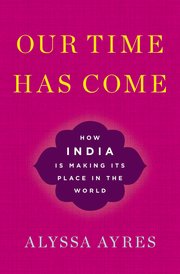
Alyssa Ayres, a senior fellow for India, Pakistan and South Asia at the Council on Foreign Relations,  addresses these questions and more in her new book, Our Time Has Come: How India Is Making Its Place in the World. She notes that India needs economic and political reforms, but these are difficult to achieve — not just because of its democratic processes, but also because consensus on reforms eludes the coalition governments cobbled together by different political parties. Ayres shared her insights into India’s evolving political and economic landscape on the Knowledge@Wharton show on Wharton Business Radio on SiriusXM channel 111. (Listen to the podcast using the player at the top of this page.)
An edited transcript of the conversation follows.
Knowledge@Wharton: India is, from all accounts, going to see incredible growth in the years to come.
Alyssa Ayres: Yes. It has seen incredible growth also over the past 25 to 28 years. There’s certainly a lot of potential – more upside – to go. People in the business community see in India so much opportunity in the momentum and the dynamism.
India has a lot of domestic challenges, so oftentimes, when you have conversations about India outside of the business space, people aren’t always able to look past its many challenges and domestic vulnerabilities. So it is always a different kind of a dialogue to talk with people who are focused on the real, tremendous potential that India still has ahead of it.
Knowledge@Wharton: The title of your book, Our Time Has Come, I believe is a quote from two prime ministers – Narendra Modi, the current prime minister, and the previous prime minister, Manmohan Singh.
Ayres: That’s right.
Knowledge@Wharton: Do you agree with their view that India has now arrived on the world stage? And if so, why?
Ayres: In many ways, India has arrived on the world stage. [It] certainly [has] in terms of economic growth and the transformation that is in process. I’m not saying [that transformation] is complete, [or that] India has solved all of its domestic problems. But according to the International Monetary Fund’s World Economic Outlook report of April 2018, India is now the world’s sixth-largest economy, moving up from seventh largest. It has overtaken the size of the economy of France. Some estimates suggest that India could overtake the U.K. economy by the end of this calendar year. That would make India the world’s fifth-largest economy. So we have to start thinking of India both as one of the world’s major economies, even though it does have a lot of domestic economic challenges at home.
In that sense, I do think that India has arrived on the world stage. India continues to face a lot of challenges when it comes to gaining access to the kinds of global institutions through which the world carries out diplomacy, works on security challenges, and engages in economic consultation. I devote some component of my book to this challenge of global governance and India’s desire to have more access to those conversations.
Knowledge@Wharton: How much of a role do you think India wants to have in those conversations?
Ayres: Indian leaders have long sought for India to have a seat at what people often call “the global high table” or “the seat at the center of the world’s table.” India’s bid for permanent membership in the U.N. Security Council is not new. India has for long made the argument of, “Hey, we’re the world’s largest democracy. We’ve been on a consistent basis one of the world’s top contributors to global peacekeeping. Why don’t we have that seat at the table?”
We could also look at economic institutions, like APEC – the Asia-Pacific Economic Cooperation forum. This is a grouping that talks about ways to improve and promote free trade and investment. Well, India is Asia’s third largest economy. It’s not a member. It’s had a membership request going back more than 20 years. There have been no new members inducted since a moratorium on membership for APEC ended in 2010. This is a real problem for the legitimacy of APEC to have India on the outside.
By the way, this is the example I often give: This year’s APEC summit host nation is Papua New Guinea. It’s wonderful that it is a member and that it is upholding the principles of free trade and investment. But this is a country with a GDP of about $20 billion. And India’s GDP is growing  — from $2.6 trillion dollars now, and is on track to become a $3 trillion economy fairly soon.
It really raises questions about access to those kinds of decision-making, consultative fora in which India could and should be playing a leadership role – and one that it does seek.
Knowledge@Wharton: What do you think is holding back the access? What are the barriers, and how can they be overcome?
Ayres: Some of these are just institutional inertia problems. Certainly a U.N. Security Council reform will be very difficult. I can’t sugar-coat that; any reform process will take years. It’s very difficult to create a slate of candidates for expansion, and then there are issues in terms of whether the Security Council permanent members should have a veto power or not. All these questions remained unresolved. Nobody can agree on those.
I should note that it is declared U.S. policy to support Indian membership in a reformed and expanded U.N. Security Council. President Obama made that declaration in a statement before the Indian Parliament, when he visited in 2010. So this is not something the U.S. has completely ignored, but I just don’t think that we have put our shoulder to the wheel on the question of helping push ahead reform.
Knowledge@Wharton: Looking back to what you said a little bit earlier about economic potential, there’s also a general election coming up in India next year. Do you see any potential risks on the economic front that could sidetrack the path that India is on? Do you see, for example, economic populism or religious fundamentalism derailing the process of economic reform that has allowed India to become financially so successful?
Ayres: This is always a risk with any major election, because Indian elections are not won on declarations of economic reform, right? That is not the platform that wins you votes. The platform that wins votes in India is a platform that often offers free electricity and water and irrigation. That’s the challenge.
Over the past year-and-a-half or so, throughout successive state-level elections in India, there’s always an election going on. In fact, there was just an election recently in a very large state – Karnataka. We have seen a series of welfare announcements, or the forgiveness of loans to farmers who, undeniably, are suffering. These are big, complex domestic economic policy issues, to try to figure out how to provide support in times of monsoon variability and challenges with crop yields and such that are really important for people who do vote in large numbers.
“We have to start thinking of India both as one of the world’s major economies, even though it does have a lot of domestic economic challenges at home.”
But in the run-up to the [2019 general elections], we’re not likely to see, for example, major economic reforms, the type of which can help unleash greater Indian economic growth in the coming years and decades.
Knowledge@Wharton: Do you think that the government of Narendra Modi and his party, the BJP (Bhartiya Janata Party) will be vulnerable to a challenge from Rahul Gandhi and the Congress Party, or perhaps a coalition of parties?
Ayres: It is hard to know what could emerge. The Karnataka election results illustrate that the BJP in that state was not able to secure a single-party majority…. The complexity of India’s political scenario with so many different parties [is significant, especially with] the ability to have both pre-poll as well as post-poll [alliances] or support from the outside to form coalitions. I would be a fool to make a definitive prediction about what might happen.
Knowledge@Wharton: Regardless of whether or not we make a prediction, what will happen to India making its place in the world – if the BJP or the Congress Party were to win, or if India were to go back to coalition politics?
Ayres: Let me answer that with two related but parallel replies. The first aspect of that is ambition and direction – the trajectory of foreign policy. I found it very interesting that when the Congress party held its plenary meeting in March, it released a statement on foreign policy that largely affirmed and agreed with the direction that the Modi government has taken on foreign policy. It affirmed the notion of India now calling itself “a leading power.” This is a new innovation of the Modi government, but it positions India in the direction that the country’s previous leaders from different parties have sought to see India placed on the world stage.
The idea that the Congress plenary would affirm India’s foreign policy direction under the present government suggests that there is a lot of consensus within India across parties that India does deserve that place on the world stage.
The thing that I do worry about is the economic front. It is so difficult to continue political reform and economic reform in India. It was very difficult for the Modi government to get the Goods and Services Tax through. This was a constitutional amendment – something that the previous Congress-led UPA coalition government had attempted – but wasn’t able to get through.
The Modi government tried to get through labor law reforms, and tried three times to issue ordinances on land acquisition reforms. All these would be helpful to unleash the manufacturing sector. It’s difficult to get these things done with a coalition government, where you’ve got disparate parties, not all of which agree on the direction towards a more market-based economy. That poses some significant challenges.
Knowledge@Wharton: If you look at the recent past of India and the growth that it has had, are there other countries that are going through similar types of issues now, in terms of their growth?
Ayres: In so many ways, India is unique on the world stage, in terms of size, complexity, and the challenges it has faced. India’s economic trajectory, in terms of reforms and the onset of reforms is about 15 years behind China’s. That doesn’t necessarily mean that India will follow the same precise path, but it does suggest that the pathway that India began in 1991 still has tremendous potential ahead of it. I am a specialist of this region, and I don’t do global comparative work. But I just can’t think of a country with similar scale, similar complexity, and similar political complexity that India has.
Knowledge@Wharton: Yes, and obviously when you’re talking about the political side of it, the difference between China and India is fairly significant.
“I’ve never met anybody in India who would trade democracy for a faster-moving system.”
Ayres: It’s enormous.
Knowledge@Wharton: So you would be hopeful that India would take a much different path in terms of mindset and freedom and other issues than going down the path of China.
Ayres: Well, this is the issue. The political challenges to economic reform are really substantial in India because people have a voice. They can debate. They can throw leaders out of office if they don’t like the direction that they’ve been going. You have civil society, which can hold protests and say, “We object to this. You’ve got to take us into consideration.” You’ve got mechanisms through the judicial system, where people can file public interest litigation about problems like, say, a large dam that may displace people.
None of those complexities [affects] China. [It] can make big changes right away – it moves quickly, no problems. But this is a challenge and a vulnerability for India, because it also makes it much harder to carry out large-scale infrastructure development, for example.
As I say in the book, these complexities are real, but that aside, I’ve never met anybody in India who would trade democracy for a faster-moving system.
Knowledge@Wharton: Since we were speaking of China, I wonder if we could talk about one Chinese initiative about which a lot has been written – the One Belt, One Road initiative. What has been India’s strategic response, and what should that be?
Ayres: India has had a very specific strategic response to this. It has been very vocal, and is the one country on the world stage that has not endorsed the One Belt, One Road initiative. India declined to send an official to the Belt and Road Forum last May, and India’s ministry of external affairs has created a list of the problems and concerns it has with the initiative. Foremost among them are issues such as the lack of transparency, in terms of the way Belt and Road loans are negotiated … and the financing [of the projects]. This can create problems of a debt trap or what has in other contexts been called “predatory economics,” [affecting] the viability and sustainability of some of these projects.
At the same time, India partners with China in other contexts. India is the number two capital contributor to the Asian Infrastructure Investment Bank. India partners with China in the BRICS Organization – the multilateral institution formed by Brazil, Russia, India, China and South Africa. They [also] created their own development bank. So you do see India partnering with China in groupings of other countries that are carrying out infrastructure investment loans on a transparent basis.
Knowledge@Wharton: The last section of your book deals with how the U.S. should deal with a rising India. Is the strategy of the Trump administration towards India the same as that of the Obama administration and previous administrations, or do you see a difference? And if there is a difference, is it one of style or of substance?
Ayres: There is a difference on the economic side. I think on the strategic and defense side, they are continuing on the trajectory that was begun under the George W. Bush administration and carried forward by the Obama administration. You do see the Trump administration continuing to partner deeply with India, and looking to grow the strategic consultation and cooperation. That is a very positive story.
I do hope that it will continue to see the rise of the concept of the Indo-Pacific region as a space where India and the U.S. can continue working more closely together to uphold a free and open Indo-Pacific, and partnering closely with Japan and Australia. Defense is in many ways one of the leading edges of the U.S.-India relationship now.
I do see a difference in the way the Trump administration is approaching India on the economic side. [The U.S. has] a long list of frictions with India on the trade front. Certainly U.S. government officials consistently seek greater market access, a level playing field and access to the Indian market for American companies. That’s very high on any U.S. government official’s list.
Now the Trump administration has taken up some economic approaches that are quite different than previous administrations, such as a focus on bilateral trade deficits. This was really never on anybody’s laundry list of discussion points.
India makes that list. There’s about a $26-billion trade deficit with India. So that’s now added to the frictions list. It turns out other things create additional frictions. The Trump administration has imposed steel and aluminum tariffs. This is not directed at India, but India is caught up in this, like some other countries, as well. The issues on immigration, again, do not specifically target India, but broadly, this also is an issue on the frictions list.
Knowledge@Wharton: The issue of H-1B visas for skilled workers has been in the news quite a bit. So looking at the economic relationship between the U.S. and India, do you foresee any potential landmines that could blow up the relationship and undermine the positive relationship that exists?
Ayres: I try to be optimistic, and I try to look for areas where success is likely to occur. For example, defense trade has been a great story. Procurements from U.S. companies have gone from essentially zero to more than $15 billion over the last 15 years. That’s a big deal. That’s a big change. I hope that does continue.
You see intensified interest in India in its own defense modernization and intensified interest from the United States in supporting that process. So India can be and can continue to grow its capacity as a net provider of regional security, across the Indian Ocean region.
But are there huge landmines? There are not so much huge landmines poised to blow up, but rather maybe a series of small gates and hedges that will be a problem, and people are going to find themselves stepping into brambles that may not go away easily.
India’s not the easiest place to do business. This will continue, and is not specifically directed at American companies, but India is No. 100 on the World Bank’s Ease of Doing Business index. The optimistic view is that it has moved up 43 places in the past three years – that’s great. [However,] it’s not in the top 50; there is some distance to travel before it’s an easier place to do business. You always hear from companies about problems they face. For example, somebody needed a permission, and it has taken 10 months. I think that those types of issues will continue.

2014/10/22

Tras consolidar su poder, Modi acelera el paso de las reformas económicas en India

El gobierno eliminó los controles a los precios del diésel y está cerca de incorporar a privados en la minería y comercialización de carbón.

Por Isabel Ramos Jeldres

Tras consolidar su poder, Modi acelera el paso de las reformas económicas en India
En mayo, Narendra Modi arrasó en las urnas y se convirtió en el primer ministro de India. Llegó al cargo tras apoyar su campaña en la promesa de apertura de la tercera mayor economía de Asia, de la mano de una serie de reformas que han sido la asignatura pendiente del país por décadas. Sin embargo, pasaban los meses y los inversionistas perdían entusiasmo.
Eso hasta el fin de semana, cuando Modi recibió el impulso que necesitaba. Su partido, el Bharatiya Janata, obtuvo mayoría en las elecciones parlamentarias de dos estados, con lo que amplía su participación en la Cámara Alta nacional. Aprovechando este momento favorable, el gobierno ha realizado una serie de anuncios en los últimos días que apuntan, principalmente, a abrir el mercado energético.
El BJP ganó 122 de los 288 escaños en Maharashtra (cuya capital es Mumbai, el centro financiero del país) y 47 de 90 en Haryana, mostraron los resultados oficiales. Las elecciones estatales son importantes para tener control de la Cámara Alta del Parlamento, donde la representación se basa en los escaños en las asambleas locales. Pese a que el BJP controla la Cámara Baja, o Lok Sabha, después de obtener su mayor victoria en 30 años, posee sólo 18% de la Rajya Sabha.
Estas victorias podrían facilitar la aprobación de proyectos de ley que permiten una mayor participación extranjera, y llegar a un acuerdo para reemplazar más de una docena de tipos de impuestos que crean incentivos a la corrupción.
"Mientras más fuerte es el BJP a nivel estatal, Modi tiene más espacio para implementar reformas significativas", dijo a Bloomberg el director gerente de Spiro Sovereign Strategy, Nicholas Spiro.
Strategy, Nicholas Spiro. En la última semana, Modi nombró a un equipo reformista en el Ministerio de Finanzas, que incluye al prominente economista Arvind Subramanian, para ayudar a formular el presupuesto y la política. Asimismo, comenzó a reformular los reglamentos laborales, reduciendo el poder de los inspectores laborales y eliminando la burocracia para las pequeñas empresas.
Apertura energética
El fin de semana Modi eliminó los controles a los precios del diésel y aumentó las tarifas del gas natural, los mayores pasos que ha dado hasta ahora para controlar los subsidios que han contribuido a uno de los déficit fiscales más abultados de Asia. "La decisión de eliminar los subsidios a los combustibles y elevar los precios del gas es un potencial punto de inflexión en las percepciones de los inversionistas del compromiso de Modi de realizar grandes reformas fiscales y estructurales", comentó Spiro. Y el impulso parece estar recién comenzando. Ayer, el gobierno aprobó un decreto que permitirá la minería comercial en el futuro, informó el ministro de Finanzas, Arun Jaitley. Con esto el país queda cerca de terminar con el monopolio estatal de cuatro décadas en la minería y venta de carbón, porque la ordenanza también permite subastas de minas de carbón a empresas privadas para su uso propio.
Modi colocó como unas de las prioridades de su gobierno reducir los apagones, en su apuesta por revivir el crecimiento.
La estatal Coal India no ha logrado sus metas de producción en al menos los últimos cuatro años, y reducir su control podría permitir que empresas como Sesa Sterlite y NMDC obtengan ganancias de las quintas mayores reservas del mundo. Permitir que las empresas privadas realicen minería y vendan carbón sería "una de las reformas clave", aseguró a Bloomberg el economista de Nomura, Sonal Varma. "La disponibilidad de combustible ha sido una gran preocupación para la economía", agregó.
De forma paralela, el país avanzó el lunes en la venta de una participación en una empresa petrolera estatal. El funcionario gubernamental a cargo de las privatizaciones se reunió con banqueros en Mumbai para discutir la venta de un 5% en Oil and Natural Gas Corp (ONGC), informó un funcionario del Ministerio de Finanzas.
La recepción de los inversionistas ha sido positiva. El índice bursátil de referencia, el Sensex, sumó ayer su tercer día de alzas.
"Lo que han hecho es maravilloso, superó mis expectativas", declaró en Bloomberg TV el director de investigación para Asia de Bank Julius Baer & Co., Mark Matthews. "El colapso en el precio del petróleo y la continua debilidad en el precio del oro es una gran ayuda para India. Hay un gran gobernador del Banco de la Reserva de India y el primer ministro es un hombre pro-negocios y con una actitud de que todo es posible, y controla un 62% del Parlamento. Las estrellas se están alineando en favor de India", acotó.
Algunos analistas han expresado también que estas reformas no sólo impulsarán el crecimiento, sino que podrían generar un aumento de la calificación del país.
Standard & Poor's subió el mes pasado la perspectiva de calificación de India de negativa a estable, y adelantó que podría elevar la nota si mejoran las cifras fiscales, externas y de inflación.
www.df.cl

2014/10/17

Sin títuloModi acelera las reformas económicas en India tras ganar elecciones estaduales

Por VICTOR MALLET
Sin títuloModi acelera las reformas económicas en India tras ganar elecciones estaduales
Narendra Modi, el primer ministro de la India, ha acelerado su reforma económica un día después de que su partido ganara dos elecciones estatales. Nombró a un economista liberal como asesor, degradó a un alto funcionario de finanzas visto como leal al gobierno anterior y aflojó los frenos burocráticos sobre las empresas. Después de meses de retraso tras la victoria de Modi en las elecciones generales de mayo, el economista estadounidense Arvind Subramanian fue nombrado el jueves como el principal asesor económico, cargo vacante desde que Raghuram Rajan fue designado gobernador del Banco de Reserva de la India hace más de un año. Subramanian -que recibirá un salario base de sólo 80.000 rupias (US$ 1.300) al mes- es un destacado economista. 
Hablando fuera del Ministerio de Hacienda en Nueva Delhi, Subramanian dijo que era un privilegio servir a un gobierno "que tiene un mandato para la reforma y el cambio". Dijo: "Creo que las cosas buenas están por venir para la economía india. Para cualquier economía como India, las dos cosas más importantes son la estabilidad macroeconómica y la creación de las condiciones para la inversión y el crecimiento rápido". Escribiendo para Financial Times en abril, Subramanian describió a Modi como "el triunfador de Gujarat" pero después de las elecciones, criticó la falta de audacia en el primer presupuesto de su gobierno y su decisión de no cumplir con un acuerdo con la Organización Mundial del Comercio. Eso llevó a la especulación de que Modi podría cancelar su nombramiento, en medio de crecientes preocupaciones en el mundo de los negocios respecto de que el nuevo gobierno no avanzaba lo suficientemente rápido para promover la inversión y eliminar los muchos obstáculos que existen para hacer negocios en India. Pero Modi y su partido gobernante Bharatiya Janata parecen haber sido galvanizados por las victorias del miércoles en las elecciones estatales en Maharashtra, el estado que más contribuye a la producción económica de India, y Haryana.
En tanto, el gobierno el jueves degradó inesperadamente Arvind Mayaram, secretario de Hacienda, y lo trasladó al Ministerio de Turismo en una reorganización de varios altos funcionarios. El nuevo secretario de Hacienda es Rajiv Mehrishi. Políticos del BJP predicen que Modi reorganizará su gabinete en noviembre tras las acusaciones de que algunos ministros carecen de las habilidades necesarias. Además, Modi puso en marcha un plan que simplifica las complejas normas laborales que han sido criticadas. Entre otras iniciativas, las empresas podrán cumplir con las normas nacionales del trabajo a través de un portal electrónico único y se alentó a entrar en la formación profesional. "La facilidad de negocios es importante", dijo Modi, refiriéndose a su compaña "Make in India" que busca convertir al país en una potencia industrial.
www.df.cl

2014/08/27

Can India’s Modi Government Navigate the Tough Terrain of Labor Law Reform?

Indian Prime Minister Narendra Modi’s success in attracting investments to the state of Gujarat, where he was chief minister, was largely due to labor law reforms. One of his election promises was that he would create a similar environment for the whole of India. Indeed, in Modi’s Independence Day speech on Friday, he urged global businesses to locate their factories in India. “I tell the world: Come, make in India,” Modi said. “Sell anywhere, but manufacture here.” His government has started taking small steps forward. But already considerable opposition is building up.
On July 30, the Union Cabinet approved amendments to three acts — the Apprentices Act 1961, the Factories Act 1948, and the Labor Laws (Exemption from Furnishing Returns and Maintaining Registers by Certain Establishments) Act 1988. Barely a week later, on August 6, two bills were introduced in the Lok Sabha, the lower house of Parliament. The third — the Labor Laws amendment — is being introduced in the Rajya Sabha (the upper house). The Apprentices (Amendment) Bill was passed by the Lok Sabha last week.
The trade unions were up in arms immediately. “We oppose the amendments vehemently because we feel that they are against the interests of the workers,” says D.L. Sachdev, national secretary of the All India Trade Union Congress (AITUC). AITUC is affiliated with the Communist Party of India. “The workers will be at the complete mercy of the employers,” says Tapan Sen, general secretary of the Communist Party of India (Marxist)-affiliated Centre of Indian Trade Unions (CITU). “They will be without any protection and, given the current unemployment situation in the country, the workers will become slaves of the contractors and employers.”
The Congress Party-affiliated Indian National Trade Union Congress (INTUC) took the lead in organizing a meeting of all the prominent trade unions. Together, they claim a membership of around 100 million. The Supreme Court has limited the unions’ power by banning bandhs (total shutdowns), but the numbers give them lots of clout. The joint meeting was also attended by the Bharatiya Mazdoor Sangh (BMS), the trade union arm of the ruling Bharatiya Janata Party (BJP).The unions have decided to hold a joint national convention in New Delhi in the first week of September “to intensify the nationwide agitation.” (For more on India’s labor law reforms, see this opinion piece byManish Sabharwal, founder and chairman of Bangalore-based staffing services firm Teamlease Services.)
Incidentally, the labor law amendments are not the only target of the unions. They are opposed to almost every reform initiative of the Modi government. A circular issued by Sen states: “The [union] meeting denounced the retrograde move of the government to allow 49% FDI (foreign direct investment) in the defense sector, 49% in the insurance sector and 100% in the railways, and also the government move to go for huge divestment of profit-making public sector enterprises.”
Opposition to the amendments is also building up in the Congress Party. Although the Congress has only 44 seats in the Lok Sabha (the lower house of Parliament) against the BJP’s 282, it is flexing its muscles in the Rajya Sabha (Parliament’s upper house). The Congress has 69 seats there against the BJP’s 42; regional parties make up most of the 250-member house. The Congress was the first mover in some of these amendments; in 2012, then minister of labor and employment Mallikarjun Kharge told the Lok Sabha that on the Apprentices Act “inter-ministerial consultation has been completed and the proposal is being sent to the cabinet secretariat for consideration.”
“The labor laws are probably the single biggest hurdle to unleashing India’s potential.”— Rajesh Chakrabarti
Now Kharge, as leader of the Congress Party in the Lok Sabha, is opposing the changes proposed by the Modi government. The specific objection to the Apprentices Act reform is that the amendment seeks to increase the minimum number of apprentices employable, per quarter, from 50 to 100 per unit, which Kharge says will encourage companies to use more apprentices at the cost of permanent jobs.
Dress Rehearsal?
The Congress and the unions are perhaps more agitated about the developments in Rajasthan, where four labor law amendments have already been passed by the state assembly. This includes the contentious Industrial Disputes Act, which the center has kept on the backburner at the moment.
“The amendments by the Rajasthan government will push out more than 80% of the industrial undertakings, as well as their workers, from the coverage of any labor laws by way of various aspects like working hours, safety, wages, etc.,” says Sen. “The government says that these amendments are for simplifying or bringing in flexibility. But the reality is that it will have a strong negative impact on the workers.” Twitter  Sachdev adds: “The unfortunate part is that both the Rajasthan government and the union government have not consulted the trade unions. That’s a dilution of the tripartite mechanism.”
“Social dialogue is critical,” says K.R. Shyam Sundar, professor of human resource management at Xavier Labor Relations Institute. “The BMS is opposing the change in the laws because of the absence of tripartite consultation.” Yet that may be just a technicality. On the Factories Act, for instance, the government had detailed all the changes proposed in a written statement to the Lok Sabha in early July. Besides, all the amendment bills were hosted on the labor ministry website and comments were invited.
“These are very important steps in the right direction. The labor laws are probably the single biggest hurdle to unleashing India’s potential,” Twitter  says Rajesh Chakrabarti, a professor of public policy and executive director of the Bharti Institute of Public Policy at the Indian School of Business.”We have nearly 90% of our labor force working in the unorganized sector precisely because of these laws. They hold back employment and, in the long run, hurt both labor and the economy.”
Many see the amendments in Rajasthan, where the BJP is in power, as a sort of dress rehearsal to gauge the opposition. According to theEconomic & Political Weekly: “For a state that has very few industries to come up with such proposals shows that the newly-elected BJP government wants to use Rajasthan as a potential laboratory for tinkering with labor laws before extending them on a national scale.” Sen agrees, noting that “the center has been utilizing their government in Rajasthan as a sort of laboratory in its project of overhauling labor laws in favor of employers.”
Sundar, however, says there could be a different strategy at work. “There are hard labor laws and there are soft labor laws,” he notes. “What we are seeing is the decentralization of labor reforms. The center is undertaking the soft reforms, while the hard reforms are being pushed to the states.”
This is possible because labor is on the concurrent list, which means both the states and the center can pass laws on it. “Any state law needs the President of India’s assent before it goes into the statute books. And the President has to act on the advice of the union cabinet,” says Sundar. The president can exercise what is called the pocket veto i.e. he sits on a bill indefinitely. Thus, the union government can exercise control over state laws.
Hire and Fire
Rajasthan has gone one up on the center by amending the Industrial Disputes Act. The key change is that a company may now close down a unit employing up to 300 workers without seeking government permission. The earlier limit was 100 workers. This will allow companies to exit factories or plants that have proved unviable. Permission to close down such units, of course, never comes.
“Rajasthan has raised the limit to 300 workers,” says Sen. “This means that in the majority of the industries, managements will have a free hand. In effect, the government has allowed hire-and-fire for employers, and workers will lose their job security. The employer will pay only the retrenchment compensation and throw them out. Earlier, they had to get the required permissions and the workers had an opportunity to put forth their point. In most of the cases, the applications of the employers were rejected on grounds of public interest.”
The result, however, is that the country is dotted with closed plants. Workers don’t get paid but they hang around in hope. Employers have to write off the capital they have sunk. When Mumbai became too expensive for the labor-intensive textile industry, companies saw moving out of the city as a viable option. In 1982, some 250,000 workers in more than 50 mills went on strike. Technically, the strike continues today. But the mills have either closed for good or moved out. Most of the 250,000 workers lost their jobs.
“What we are seeing is the decentralization of labor reforms. The center is undertaking the soft reforms, while the hard reforms are being pushed to the states.”— K.R. Shyam Sundar
“If it hadn’t been for the labor laws, workers at the Nokia plant in Tamil Nadu would have been happily working for Microsoft today,” says Sundar, giving another example. When Microsoft bought Nokia’s handset business for $7.2 billion, the plant was kept out of the deal because of certain disputed tax demands and the unwillingness of the software giant to acquire a unit where its management freedoms were restricted. Today, Nokia, which is running the plant for Microsoft as a contract manufacturer, has offered voluntary retirement to its 6,500+ staff; more than 5,000 have accepted.
Chakrabarti, however, offers another view. He notes that the closure of the Nokia plan is a result of an acquisition and says: “Given that the workers have voluntarily chosen [retirement], there is not such a huge problem. Closures and exits will be part of the free market system.”
What are the specific objections the unions have to other pieces of legislation that are being amended? One provision of the new Factories Act is that a worker may work overtime for 100 hours a quarter, up from the earlier 50 hours. “The increase in overtime means that the workers will be compelled to do double and triple shifts,” says Sen. “This will result in less employment generation.”
The amendments would also allow women to work in night shifts; they can currently only do so only from 6 a.m. to 7 p.m. “This change is being done in the name of gender parity,” says Sachdev. “But we are opposed to it because we feel that adequate security measures are not in place. In the IT [information technology] and BPO [business process outsourcing] industries, it has been streamlined. But in the factory environment, security is still a big concern….”
Ela Bhatt, founder of the Self-Employed Women’s Association (SEWA), notes that the International Labor Organization (ILO) has ruled that any protective measures applying to women (or any category of workers) shall not be construed as being discriminatory. “In other words, anyone who argues that allowing women to work on night shifts represents some sort of progress toward equality argues in bad faith. The equality we want is not to be achieved by leveling downward…” Congress spokesperson Shobha Oza says, “I don’t think it is advisable to have night shifts for women in factories.”
The Congress view may not matter so much because it doesn’t have the numbers in the Lok Sabha. The Rajya Sabha hurdle can be passed if the government decides to get the bills approved by a joint sitting of the two houses. There are precedents for that: The government of Atal Bihari Vajpayee got the Prevention of Terrorism Act passed in a joint session in 2002.
But it may not be possible to similarly defang the unions. There is a perception that the trade union movement in India has been growing weaker. “I don’t agree,” says Sen. “If that were the case, why are employers and the government so concerned and afraid of the trade unions?” Sachdev concedes a point. “Earlier, the trade unions were mainly based in the organized sector,” he says. “Now, with the closure of many industries, formal labor is being pushed into informal segments. So, naturally, there is a change and the trade unions are reorienting themselves. This takes time.”
Labor Laws vs. Investments
“There are many reforms that are pro-labor,” says Sundar. “The government should start with those. Even the ILO has said that bang-bang reforms can be counterproductive.” Tine Staermose, director of ILO’s country office for India, told Business Standard in Delhi that “rushing through [reforms] is a bad idea. It can lead to labor unrest. Investment is a shortsighted way of approaching such reforms.”
“With the closure of many industries, formal labor is being pushed into informal segments. So, naturally, there is a change and the trade unions are reorienting themselves. This takes time.”— D.L. Sachdev
In a joint statement, the central trade unions have attacked both the haste (“these amendments in labor laws are being pushed through”) and the focus. The statement says: “The unions also expressed dismay over the government’s total inaction in implementing the consensus recommendations on minimum wages…”
Do labor reforms lead to higher investment? “In the medium- to long run, almost inevitably. These are precisely the structural changes needed in the country to bring in investment,” notes ISB’s Chakrabarti. SEWA’s Bhatt disagrees. According to Bhatt, it is a “fallacy” that relaxing social protection and workers’ rights attracts investments and creates jobs. “That would mean that the countries with the lowest wages and without any protective labor legislation attract the most investments. In fact, it is the opposite.”
Bhatt notes that “economic success cannot be achieved by reducing workers to virtual serfdom,” and adds that it depends on many other factors like “high productivity — which requires a secure, protected and skilled labor force — an effective vocational training system, free and universal education, and competent and clean professionals.”
With the first single-party majority in 30 years — and five years of governance ahead of it — the BJP may have a different way of calculating the political cost. Its steps on labor laws may be timid so far, but one way or the other, it will get the changes implemented. Already, states like Haryana, which is ruled by a Congress government, are talking about labor reform. The groundwork has been laid. “We are taking [the proposals] to the cabinet and the chief minister will formally announce it,” state labor minister Shiv Charan Lal Sharma told business daily Mint. Others are also thinking about labor reform — according to Mint, “state governments [are] cutting across political lines [to] compete with each other to attract investments and create more jobs.”
“I think the elections have brought out an important change in the central government’s thinking about what reduces poverty,” says Manish Sabharwal, chairman of staffing services firm Teamlease (see his opinion piece on the labor reforms here). “The previous government — largely guided by the civil service ayatollahs at the National Advisory Council — believed that poverty would be reduced by a regime of subsidies and rights. But this government, thankfully, recognizes that its electoral victory is rooted in a vote for development and jobs.” This means that the government is willing to take on the vested interests — a small vocal minority — that have sabotaged any labor law amendments over the past few decades, he adds. “I think this government recognizes that job preservation is not a form of job creation and creating jobs at the scale India needs cannot happen without tackling the regulatory cholesterol that has [hindered] formal job creation.”
According to Chakrabarti, “The number of people entering the job market in the next couple of decades will be gigantic. Protecting the interest of a small coterie of formal sector employees at the cost of millions languishing in semi-employment or the informal sector will make the entire economy unstable. The government has to make the job market flexible to create more jobs for market entrants. Hire-and-fire is normal and inevitable, but with appropriate compensation and, at times, re-skilling. Many companies do it for their own reputation. The government can set standards there.”