Mostrando las entradas con la etiqueta Starbucks. Mostrar todas las entradas

2016/05/03

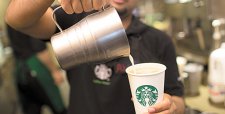
Demandan a Starbucks… por poner demasiado hielo en sus bebidas

La acción busca ganar millones de dólares para los consumidores que recibieron más hielo que café en sus vasos.

Demandan a Starbucks… por poner demasiado hielo en sus bebidas
Una mujer de Illinois ha interpuesto una demanda que ha dejado fría a la cadena de cafeterías Starbucks. La consumidora exige una compensación por la alta cantidad de hielo que la empresa de la sirena pone en sus bebidas, bebidas en detrimento de la cantidad neta que se promete en cada especialidad.
La afectada, Stacy Pincus, - quien podría obtener una compensación por 5 millones de dólares (mdd) ante el daño moral ocasionado por la firma- alega que la bebida grande que compró no alcanzó los 420 mililitros por la cantidad de hielo, cuando la empresa se compromete a servir 600 mililitros en dicha presentación. 
Durante marzo pasado, un grupo de consumidores interpusieron una denuncia contra Starbucks por vender café latte 25% más pequeño al promocionado en su menú.
De acuerdo con la queja, una bebida venti fría contiene 397 gramos de bebida y solo alcanza los 680 gramos que anuncia cuando se le agregan los hielos. La demanda asevera que un consumidor promedia bebe su café antes de que se derrita el hielo, por lo que el volumen perdido jamás se recupera.
Jamie Riley, portavoz de Starbucks, asegura que la empresa se encuentra al tanto de la demanda, aunque desestima los argumentos de Stacy Pincus.

2015/04/02

How Starbucks Can Stick with ‘Race Together’ — and Get It Right

Howard Schultz, CEO of Seattle-based coffeehouse chain Starbucks, clearly got more than what he bargained for when he launched on March 16 a campaign called “Race Together” to stimulate conversations on race issues. The plan called for Starbucks baristas to write the words “Race Together” on customers’ cups, but many saw that as an intrusion into their personal space. The outrage was intense on social media, compelling the company’s vice president of public relations to delete his Twitter account. A week later last Sunday, Schultz ended the campaign, which he said was the plan all along.
Wharton marketing professor Americus Reed identified the fundamental problem with the Starbucks campaign. “It is intention versus execution here,” he said. “From a marketing standpoint, it is always going to be a challenge because consumers are skeptical and they’ll always think there is an ulterior motive here: You’re trying to sell me more coffee [or] you’re trying to create a halo around the brand. If you can get past that in setting up a sustainable, credible track record with authenticity, you have a chance.”
“Schultz as activist CEO wants to have an impact on society,” added Kenneth L. Shropshire, Wharton professor of legal studies and business ethics and director of the Wharton Sports Business Initiative. “He steps in at a point where for years, we’ve heard presidents and others talk about the need to have a conversation about race. [I have] great applause for the step that was taken; let’s see if we can do it better.”
Reed and Shropshire discussed the takeaways from the Starbucks campaign for businesses at large on the Knowledge@Wharton show on Wharton Business Radio on SiriusXM channel 111. (Listen to the podcast at the top of this page.)
“From a marketing standpoint, it is always going to be a challenge because consumers are skeptical and they’ll always think there is an ulterior motive here.”–Americus Reed
Both Reed and Shropshire felt that Schultz took on a challenging task with the “Race Together” campaign. “Whether or not he took the right steps to do what he wanted to do, it’s such a difficult issue,” said Shropshire. “I have a hard time critiquing him for stepping out in a way so many people won’t, and so many institutions won’t.” Added Reed: “It’s a very difficult challenge to start that conversation in a way that obviously came off as gimmicky, quite honestly.”
Authenticity, Credibility and Sustainability
To get it right with such programs, Reed said companies must first be clear about their purpose. “What is your end goal? Is [it to] start a conversation?” he asked. “Or are you saying that you are trying to move some set of relationships culturally forward?”
According to Reed, the key word in such activist initiatives is authenticity. “One of the things you want to do is to create a credible track record that you are involved in these issues over time,” he said. “That paves the way for you to at least begin to start to have that conversation when you open up that door.”
Shropshire said another important aspect is for companies to invest in a “sustained effort” around such programs. “You can stumble a lot if you’re going to be at it for the long haul,” he said. “That’s the piece I’m really watching — [is Starbucks] going to stay with this, as [Schultz] suggests? You pulled away quickly on Round One. So let’s see. Starbucks is the kind of enterprise that can really have an impact in the long run.”
Coffee Spills
The two Wharton experts identified other missteps in how Starbucks went about the “Race Together” campaign. Asking young store attendants to trigger conversations on complex issues like race may not have been a good idea, as Shropshire saw it. “You can figure out how to sell a 50-cent cup of coffee for $5,” he said. However, he was not as optimistic about “the idea of solving the race problem by having 20-somethings that may not understand the issue” stimulate conversations on it.
“[I have] great applause for the step that was taken; let’s see if we can do it better.”–Kenneth L. Shropshire
Reed agreed, and felt Starbucks was “equipping people for failure” by expecting young baristas to start talking about race issues. “Deeper conversations can come out when the context is right,” he said. “And that context is not going to be in the morning rush when someone’s handing over a cup of coffee that says ‘Race Together.’”
Reed also said companies must be careful when they engage in word-of-mouth campaigns. “You’ve got to be pretty aware of how that conversation is going, how it’s going to flow and how you’re going to be able to manage it,” he said. “That was a bit of an oversight [on the part of Starbucks].”
Starting with a Deficit
When companies launch programs supposedly for the social good, “the challenge is that … consumers already believe that you are up to something,” said Reed, citing research data. “You are already starting at a deficit. They don’t believe what your message is — they think there is an ulterior motive.” Reed said companies have to work hard to get around that obstacle. It would be wrong for companies to sneak in a business motive along with a social message, he warned. “You want a conversation, not a tag line.
“Here you have to have a credible track record, to [Shropshire’s] point about sustainability [and the other] efforts that go into this,” Reed continued. “That gives you a bank account to work with that allows for these little mistakes — these little hiccups in the road — to continue to try to move this conversation forward.”
Test marketing such campaigns “in a couple of little, under-the-radar markets to see what happens” is also important, Reed said. The resulting feedback would help company managements to refine their message and the approach before a national rollout, he added. “The overall goal would certainly be just to get a temperature.” He acknowledged that companies would get varying results in different places depending upon the racial profile of the local population.
“You can stumble a lot if you’re going to be at it for the long haul.”–Kenneth L. Shropshire
Refill Cup
Where should Starbucks go next with its campaign? “Don’t let it die,” advised Shropshire. ”Now you’ve got our attention. It is a tremendous opportunity. Even if you say you’ve got to retool and re-think this, but are not going to give up, that would be powerful.”
The Starbucks episode could persuade “other institutions to be inspired to have these conversations,” he noted. “This whole dream about national conversations on race [has] been brought up so many different times. How often is race discussed if it is not a news story?”
Reed, too, felt Schultz doesn’t need to completely abandon the campaign. “Pulling back now and apologizing is a huge error,” he said. “But to say, ‘Hey, let’s retool this thing, let’s pivot a little bit, let’s keep this going because it is important to keep striving for’ is a smart signal.”
As it happens, Schultz is not giving up. The “Race Together” campaign was in line with his pledge at a company open forum last December “to stimulate conversation, empathy and compassion toward one another,” he said in aletter last Sunday to Starbucks “partners” (as he prefers to call his employees).
“But this initiative is far from over,” Schultz continued. He talked of plans to hire 10,000 “opportunity youth” over the next three years, hold more open forums and dialogues with community leaders, and forge “new partnerships to foster dialogue and empathy and help bridge the racial and ethnic divides within our society that have existed for so many years.”

2015/03/06

Productores colombianos acusan a Starbucks de no vender café local

Cuando inauguró su tienda insignia en la capital colombiana en julio pasado, la compañía dijo que sus tiendas en el país serían "las primeras en todo el mundo que servirían café exclusivamente de origen local.

Starbucks está bajo el fuego de los agricultores colombianos por ofrecer café extranjero en sus tiendas de Bogotá después de comprometerse a servir preparaciones "100% de origen local" en la nación andina.
Cuando inauguró su tienda insignia en la capital colombiana en julio del año pasado, la compañía dijo que sus tiendas en el país serían "las primeras en todo el mundo que servirían café exclusivamente de origen local", así como "café empaquetado en grano de otros mercados de todo el mundo".

Sin embargo, lejos de lo prometido, la compañía con sede en Seattle también sirve tazas de café de Guatemala, Kenia, Panamá y Hawai en sus tiendas de Bogotá, frustrando así a los productores locales.

"Vinieron aquí e hicieron una promesa", dijo Óscar Gutiérrez, portavoz de la Dignidad Cafetera, un grupo que defiende los intereses de los agricultores nacionales de café. "Es muy malo para Colombia que una multinacional venga aquí, venda café extranjero y envíe las ganancias de regreso a su sede".

Alisha Damodaran, de Starbucks Global Communications, dijo a Bloomberg que la promesa de "100% de origen local" se aplica a las bebidas tales como cappuccinos, frappuccinos y expresos que se venden en las tiendas, y eso no ha cambiado.

Colombia, el mayor productor del mundo, después de Brasil y Vietnam, se ha enfrentado a repetidos problemas en sus plantaciones de café en los últimos años, incluyendo la caída de los precios y los ataques de brotes de insectos y hongos. En 2013, la caída de los precios provocó protestas con los caficultores bloqueando carreteras y enfrentándose a la policía al tiempo que exigían ayudas del gobierno.

"Esta es una manera de importar café a Colombia, y daña a los productores de café", afirmó Jorge Enrique Robledo, senador de la oposición de la provincia de Caldas, una de las principales regiones productoras de café de Colombia.

Los precios del café Arábica se han reducido en alrededor de 32% en los últimos seis meses, en medio de la mejora de las perspectivas para la cosecha en Brasil, el mayor productor y exportador del mundo.
www.df.cl

2014/09/05

Unemployment, Starbucks, and predicting the NFL — five things to know today

  • by 
  •  
  • Hello, friends and Fortune readers.
    Happy Friday! In a sign that summer is officially behind us, last night was the first game of the new NFL season, and at least one company isn’t letting the opportunity pass without getting in on the action. Here’s that plus everything else you need to know in business today:
    Unemployment numbers come out today
    It’s been a busy week for jobs numbers, and the big one comes out today — the monthly unemployment rate. One analyst atCNBC actually thinks that Fed chair Janet Yellen would welcome a rising unemployment rate, since it would help prove her general approach to the economy.
    TechCrunch Hackathon kicks off tomorrow
    The big TechCrunch Disrupt conference kicks off next week (where it will surely be outshone by a certain announcement Apple is making on Tuesday!) but this weekend is the annual Hackathon that precedes the conference. Successful startups like GroupMe (which sold to Skype) started off as hackathon projects, so its worth keeping an eye on.
    The way you get your latte could be changing
    Starbucks is going to be opening two new types of stores this fall — one for the java connoisseur and one for the busy urbanite. The Seattle chain will be launching around 100 stores with limited edition coffees, plus offering the special brews at 800 and 1,500 existing stores. It will also be opening a number of smaller “express” stores with limited menus to cut down on lines.
    Apple ramps up security
    In response to the ongoing celebrity nude pictures scandal, Apple is ramping up security for the iCloud. Actions like sending alerts when password changes are requested could cut down on hacking, or, at least alert the victim to an attempt.
    Microsoft is predicting NFL games now
    This summer, Microsoft’s Cortana predicted 15 of 16 World Cup knockout games correctly. Now, the personal assistant ishaving a go at the NFL. It was right about last night’s kickoff game (the Seattle Seahawks beat the Green Bay Packers 36-16). Can the magic continue?

    Starbucks to test express stores, tasting rooms

  • by 
  •  
  • Starbucks is experimenting with some new retail formats, including smaller locations, as the coffee giant tinkers with how it can best expand its retail business.
    One of those new store options involves a tasting room dedicated to roasting, coffee education and increased availability of the company’s small-batch coffees. Starbucks is planning to open its first-ever tasting room in December, after more than two years of developing that concept. That concept will be a 15,000 square-foot interactive retail store.
    Starbucks also says it plans to expand its “Reserve” coffeeoptions–which are some of the rarer coffees it often sells for a limited time–to 1,500 locations globally, as well as open at least 100 stores in the next five years designed to sell those rare coffees exclusively.
    The move comes as retailers, including many that sell food and beverages, struggle with troublesome declines in store traffic and same-store sales as consumer spending habits shift rapidly. Starbucks  SBUX 0.03%  has largely bucked that downward trend–comparable-store sales leapt 6% globally in the latest quarter, the 18th consecutive quarter growth has exceeded 5%. In the U.S., comparable-store sales were up 7%.
    Meanwhile, Starbucks is also investing in smaller store footprints that address what it calls the “increase in urbanization and decentralization of retail.” Starbucks claims drive-thru stores have higher average sales than locations that don’t have that option, and currently account for more than 40% of U.S. company-operated locations. The “express” stores that Starbucks is looking to expand will sell a concentrated set of beverages and foods, as well as aim to integrate mobile payments to speed up service.
    A number of large retailers, including Wal-Mart  WMT 0.76%  and Best Buy  BBY -0.37% , have opened smaller stores in recent years–moving to either operate more locations in urban areas or address changes in the way customers shop. Starbucks obviously doesn’t operate stores nearly as large as those retail peers, but it is notable the company is thinking about how it can bolster sales at stores that are meant to serve customers at a faster pace.
    Starbucks says it is on track to open about 1,550 net new stores in fiscal 2014 and 1,600 net new stores the following year.

    2014/06/22

    Walmart, Amazon, Starbucks, Uniqlo: A Look Back At One Of The Biggest Weeks In Retail News

    Barbara Thau
    Contributor
    The retail industry’s ears must be ringing.
    News in the sector blew up this past week, and the stories that unfolded over the last few days point to larger trends reshaping the industry. Here’s a recap of the week in retail news.
    Walmart Ramps Up Made In America Push
    Walmart is beefing up efforts to increase apparel and textile production in the U.S. as part of its Made In America push. It plans to connect manufactures and suppliers of apparel, textiles and home goods with components part makers, setting up, in effect, a trade fair, at its second Manufacturing Summit in Denver come August, the retailer told Women’s Wear Daily this week.
    The takeaway: While Amazon has no doubt stolen some of Walmart’s bellwether-of-the-retail-industry thunder, the chain is still the world’s largest store, and an industry pacesetter.
    By now, it’s become pretty clear that Wal-Mart’s plan to buy $250 billion in U.S.-manufactured products over the next 10 years, which was first announced in January 2013 at the National Retail Federation’s Big Show, is not a passing fad, but an ongoing mission to rework how the nation sources its goods, which has been defined for decades by a made-overseas model.  That push is poised to force other retailers to intensify their efforts to ramp up manufacturing stateside.
    Amazon’s New Fire Phone Bows
    Amazon launched its Fire phone, which includes a 4.7-inch screen, unlimited photo storage capacity, and an app called Firefly that can identify products in the real world. “The Firefly button lets you identify printed web and email addresses, phone numbers, QR and bar codes, artwork, and over 100 million items, including songs, movies, TV shows, and products,” said Amazon founder and CEO Jeff Bezos, reported my colleague Laura Heller, who attended the event that launched the Fire.
    The takeaway: It’s no secret that as shoppers are increasingly tethered to their mobile devices, retailers are scrambling to unlock the sales potential of mobile commerce, which is expected to generate an estimated $57.8 billion in retail sales in 2014, up 37.2% from 2013, according to market research firm eMarketer.
    And when the nation’s biggest online merchant takes its boldest step into mobile commerce to date, attention must be paid.
    With the Firefly app, “shoppers in any store, any where, at any time can instantly compare prices and buy an item they find for less on Amazon,” Heller says.
    What’s more, those who purchase the phone get a free year of Amazon’s Prime shipping and content service.
    With this phone, Amazon, the ultimate retail disruptor that has siphoned market share from long established chains ranging from Wal-Mart to Best BuyBBY -2.11%, is now making it that much easier to shop from “the everything store.”
    The Fire phone “clearly demonstrates their high priority on bridging the physical and digital worlds to capture a strong hold on the shopping and transactions battleground,” said Matt Schmitt, president, chief strategy and innovation officer of Reflect, in the post, “Amazon’s Fire Phone is all about selling stuff on Amazon.com AMZN -0.91%,” on Retailwire. “This is an area of relative weakness for Apple AAPL -1.03% and Google.”
    Starbucks To Fund Employees’ College Education
    Howard Schultz, Starbucks CEO, unveiled a plan this week that he said is close to his heart.

    For employees of the coffee chain who work at least 20 hours a week, the new Starbucks College Achievement plan will offer free tuition for juniors and seniors to complete a bachelor’s degree via Arizona State University, and at least 50% tuition reimbursement for freshmen and sophomores.
    The takeaway: With this move, Starbucks is taking its conscious-capitalism ethos to new heights, raising the bar for other merchants.
    Consumers are increasingly voting with their dollars for brands they deem socially responsible. And Millennials, who by 2020 are expected to eclipse baby boomer as the nation’s biggest spending group, are particularly drawn to brands with a social conscience. So for retailers, implementing ethical retailing practices – be it by selling fair trade and eco-friendly products to funding key causes like education or the fight against hunger – is not only about doing right, it’s also good business.
    Uniqlo Ramps Up Expansion
    Japan’s largest retailer Uniqlo, now with a mere 20 stores in the U.S., will almost double its store count in the fall with the roll out of 18 units in eight weeks, reported Women’s Wear Daily.
    The takeaway: With its casual clothing aimed at consumers from 8 to 80 and a mission to storm the U.S. market, is Uniqlo poised to become the Gap for the 21st century?
    Uniqlo’s first foray into the American market in 2005 flopped. It opened three stores in malls when nobody had heard of the chain, only to later close them by year’s end.
    Its expansion strategy this time around, which began in 2011, has been to make a bold splash with massive stores in big cities.
    But does Uniqlo’s distinct assortment of simply-cut clothing (although it’s been sprinkling the mix withmore fashion-driven items), tricked out with high-performance features such as its exclusive Heattech heat-retaining technology, have enough widespread appeal in the U.S. to support hundreds of stores?
    Stay tuned.
    Follow me on Twitter.

    2014/04/28

    Starbucks Is Tapping Into 4 Major Growth Opportunities

     
    teavana starbucks
    Starbucks will report earnings this afternoon. 
    In November, analysts at Morgan Stanley highlighted four major growth opportunities for Starbucks based on a presentation by company executives. 
    None of the growth opportunities directly involve coffee, Starbucks' signature product. 
    Instead, executives should focus on food, tea, and soda. 
    These topics are likely to come up when Starbucks discusses earnings today. 
    1. The Boulange Bakery. Starbucks is in the process of replacing its traditional pastries with sweets from the La Boulange brand, a longtime San Francisco favorite. In addition to offering more edgy "sweet and savory" items, Starbucks is now heating up all pastries before they're served to customers. "Results are getting better as more cities are added, with strongest adoption on the coasts," the authors write. 
    2. Drive-thrus. Starbucks is continuing to add drive-thrus at locations across America, which Morgan Stanley calls a "meaningful sales driver." Two-thirds of units Starbucks is building this year have drive-thrus, according to the note. 
    3. Lunch. Starbucks is testing lunch soups and sandwiches at certain locations. Menu items include barbecue pulled pork sandwiches, chicken noodle soup, and a grilled chicken chipotle panini. "Lunch test is still in early stage but we see it as big incremental opportunity," the analysts write. 
    4. Soda and tea. Starbucks is currently rolling out more carbonated beverages and Teavana teas, categories that will expand to all locations by the end of 2014. Starbucks also plans to add as many as 1,000 Teavana cafes in the next few years. 


    Read more: http://www.businessinsider.com/starbucks-opportunities-for-growth-2014-4#ixzz30D2sWwyN

    2014/02/17

    Four Reasons Why People Love To Hate Starbuck

    By 
    Dumb Starbucks
    For all of Starbucks' fervent loyalists, there are equally passionate haters of the ubiquitous coffee chain.
    That's why the fake "Dumb Starbucks" store that popped up in Los Angeles last week became an instant global sensation.
    The brand's polarizing effect on people is partly what's responsible for its massive success, reporter Bruce Horovitz writes in USA Today. 
    Horovitz gives these four reasons for why Starbucks is so easy to hate.
    1. Starbucks coffee is overpriced. "There are millions who cringe at its sheer audacity to charge up to 5 bucks for a cup of fancy coffee — where folks wait in long lines for it," Horovitz writes. 
    2. Starbucks is too successful. The stock is up 35% over last year and the company made $14.9 billion in revenue in 2013, up from $13.3 billion the previous year.
    "Starbucks has a problem that every other brand only wishes it shared: It's too damn good," Horovitz writes.
    3. Starbucks is everywhere. The company's haters tire of seeing its green logo at every turn. Starbucks now has more than 20,000 locations in 62 countries, and roughly half of Americans live within 5 miles of the coffee shop, according to a 2012 study.
    4. People are envious of Starbucks CEO Howard Schultz's success. "I've got this theory. It's called the why-didn't-I-think-of-that-first? theory," Horovitz writes. "There are millions of Americans who hate Starbucks — and its founder, Howard Schultz — mainly because he took a great idea and ran with it, not just down the field, but across the planet."


    Read more: http://www.businessinsider.com/reasons-people-love-to-hate-starbucks-2014-2#ixzz2tagOG1fl

    2014/02/13

    Starbucks ofrecerá vasos reutilizables en México

    Al igual que en EU y Canadá, Starbucks continúa con su compromiso de responsabilidad social ofreciendo vasos reutilizables a sus clientes en México.

    Estos vasos, que pueden ser reutilizados 30 veces para servir cualquier bebida, representando 30 vasos menos de papel en la basura o 1.5 kg menos de madera, estarán disponibles en las 415 tiendas de la famosa cafetería a partir de este mes.


    Ciudad de México.- Starbucks anunció el lanzamiento en México de un nuevo vaso reutilizable de plástico, con el objetivo de reforzar sus iniciativas de reciclaje y reducción de residuos.
    Los vasos reutilizables son una iniciativa global de la marca; cuentan en su interior con líneas de llenado que marcan las medidas estándar de la marca: “Alto” y “Grande”. Como medida de higiene para el uso de los vasos reutilizables, los “partners” de las tiendas los lavarán con agua hirviendo antes de servir cualquier bebida.
    De esta forma, Starbucks busca inspirar a sus consumidores a cambiar sus hábitos a favor de la comunidad.Los clientes que adquieran el vaso reutilizable, recibirán un descuento de un peso cada vez que lo utilicen. 
    “Nuestra meta es que para el 2015 el 25% de las bebidas se sirvan en vasos reutilizables en todas nuestras tiendas. Esta política ambiental de la compañía ya ha arrojado resultados positivos tanto en EU como en Canadá, donde fue lanzado el año pasado, y esperamos que nuestros clientes mexicanos se sumen a la iniciativa”, comentó el director general de Starbucks México Federico Tejado.
    El Semanario Sin Límites con información de medios.

    2014/02/06

    11 Facts About Starbucks That Will Blow Your Mind

    By ASHLEY LUTZ AND MIKE NUDELMAN

    Starbucks has become a global powerhouse, and the brand only plans to get bigger. 
    We compiled some facts about Starbucks that will blow your mind: 
    Starbucks Facts Infographic
    Mike Nudelman/Business Insider


    Read more: http://www.businessinsider.com/starbucks-facts-2014-2014-2#ixzz2sYFnzSyo

    2013/11/24

    Starbucks Has Four Huge Opportunities For Growth

    By ASHLEY LUTZ

    starbucks boulange bakery
    Starbucks is one of the most dominant brands in the world, but the coffee chain has plenty of room for growth. 
    Analysts at Morgan Stanley highlighted four major growth opportunities for Starbucks based on a presentation by company executives. 
    None of the growth opportunities directly involve coffee, Starbucks' signature product. 
    Instead, executives should focus on food, tea, and soda: 
    1. The Boulange Bakery. Starbucks is in the process of replacing its traditional pastries with sweets from the La Boulange brand, a longtime San Francisco favorite. In addition to offering more edgy "sweet and savory" items, Starbucks is now heating up all pastries before they're served to customers. "Results are getting better as more cities are added, with strongest adoption on the coasts," the authors write. 
    2. Drive-thrus. Starbucks is continuing to add drive-thrus at locations across America, which Morgan Stanley calls a "meaningful sales driver." Two-thirds of units Starbucks is building this year have drive-thrus, according to the note. 
    3. Lunch. Starbucks is testing lunch soups and sandwiches at certain locations. Menu items include barbecue pulled pork sandwiches, chicken noodle soup, and a grilled chicken chipotle panini. "Lunch test is still in early stage but we see it as big incremental opportunity," the analysts write. 
    4. Soda and tea. Starbucks is currently rolling out more carbonated beverages and Teavana teas, categories that will expand to all locations by the end of 2014. Starbucks also plans to add as many as 1,000 Teavana cafes in the next few years. 


    Read more: http://www.businessinsider.com/starbucks-four-opportunities-for-growth-2013-11#ixzz2lZJiwwVW