Mostrando las entradas con la etiqueta Amazon. Mostrar todas las entradas

2019/04/22

The Doctor Is in: What HIPAA Compliance Means for Amazon


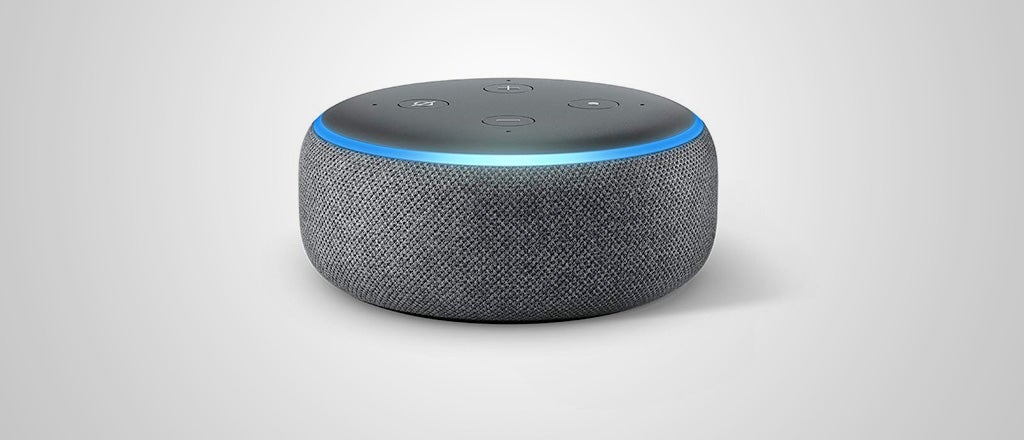
Millions of people use Amazon voice assistant Alexa to play music, make phone calls or order a delivery of dog food. Now they can ask the device to help them find a doctor or check their blood sugar. The tech giant announced this month that Alexa is HIPAA compliant, which means it is allowed to receive and transmit information that is protected under the U.S. Heath Insurance Portability and Accountability Act (HIPAA) of 1996. Amazon is currently working with six business partners — Livongo, Express Scripts, Cigna Health Today, Swedish Health Connect, Atrium Health and ERAS, a program of Boston Children’s Hospital —  to help customers make appointments, access medical instruction, track a prescription and other services. It’s a big step for one of the world’s most powerful companies, giving it a stronghold in the $3.5 trillion health care industry.
While the potential for better health outcomes is huge, observers say there are still significant concerns about patient privacy and how Amazon plans to use the data. The Knowledge@Wharton radio show on Sirius XM invited two experts to discuss the topic. (Listen to the podcast at the top of this page.) Robert Field is a professor of law, and health management and policy at Drexel University and a lecturer at Wharton. Arnold J. “Skip” Rosoff is professor emeritus of legal studies and health care management at Wharton and a senior fellow at Penn’s Leonard Davis Institute for Health Economics.
Following are five key points from their conversation.
The Possibilities Are ‘Intriguing’
Both scholars think it was only a matter of time before voice recognition moved into the health care realm, and they’re not surprised that Amazon was the company to get there first.
“It’s an intriguing possibility,” Field said. “You now have a box on top of your kitchen counter that is essentially your doctor talking to you. The question is, will it be a technology in search of a purpose?”
He pointed out that what Alexa can do is no different than what can be done with a keyboard. Currently, the technology offers the same basic functions as a web search. Alexa can’t yet connect users directly with physicians or other health care providers, but that’s expected to change over time.
Field thinks the future capabilities raise a “fascinating psychological dimension” about how much private information people are willing to share with a device, especially elderly patients. That cohort did not grow up with smartphones and laptops, so they may be less comfortable speaking to Alexa about their personal health issues.
“It’s one thing to say, ‘Alexa, play ‘60s music for me.’ It’s another thing to say, ‘Alexa, I think I have diabetes,’” Field said. “Maybe with time we’ll get used to the idea that this box in our kitchen is our friend, is our physician. But maybe not.”
Rosoff offered a different take, dismissing the stereotype of older people as Luddites who fear technology. Rather, they may have physical or mental obstacles that prevent them from typing, for example.
“I’m not sure that Amazon’s checking off the regulatory box on HIPAA compliance begins to answer the privacy concerns that we ought to have.”Arnold J. Rosoff
“If all they had to do was talk, they’d be much more willing to share information,” he said. “You go into the kitchen in the morning to get your coffee, and Alexa says, ‘Good morning, did you remember to take your pills?’ I can see how you can form a bond with Alexa, especially if your spouse has passed on and Alexa is the only [voice that] talks to you.”
HIPAA Compliance Isn’t Adequate
Amazon had been working for some time to develop software that would meet federal HIPAA regulations, and it even created a health team within its Alexa division a year ago to work on the project, according to Business Insider. Meeting HIPAA standards is important, but the professors questioned whether it is enough.
“I’m not sure that Amazon’s checking off the regulatory box on HIPAA compliance begins to answer the privacy concerns that we ought to have,” Rosoff said.
He explained that the regulations make a sharp distinction between data that identify patients and data that do not. De-identifiable data are often shared with third parties, including academic researchers and pharmaceutical companies. Identifiable data have to be guarded far more carefully.
“In the evolving digital world, the ways that we can re-identify data have gone up dramatically, and I don’t know that HIPAA compliance adequately addresses that concern,” Rosoff said.
Field agreed, saying the compliance that Amazon has achieved is narrow. As a business associate, Amazon is promising to abide by the same regulations as the health care providers, but that stipulation was originally intended for something like an employee of a copier company seeing a medical record when he or she services the machine or delivers copy paper.
“This is kind of turning the notion of HIPAA privacy on its head. It’s data coming in through the business associate,” Field said. “I’m sure their lawyers have scrutinized this and approved it, but going forward they’re going to have to be very careful to stay within the box because it’s going to be very easy for data to leak out, and then this narrow compliance will no longer protect them.”
“We can speculate about what it’s going to do to industry structure, and there are some fascinating possibilities.”–Robert Field
What Happens to the Data?
Concerns about privacy are intertwined with worries about data. Amazon may be the world’s largest retailer, but it’s really a tech company that has been built on the bedrock of data generation and analysis.
Under HIPAA, patient consent is required for the release of data to anyone except for clinicians treating the patient, the insurer or payer, a clearinghouse that’s collecting the data, or for the operations of the provider. “Amazon would be bound by this as well, which raises the question: What are they going to do with the data?” Field said. “If it’s patient-identified data, can they use their traditional business model of targeting people for advertising? They answer should be no. But they must have some idea in mind, because that’s the way they do things. “
Rosoff mentioned Xealth, a Seattle-based health care platform that is integrated with Amazon. The platform works with physicians to put together a list of products and services that may benefit a patient’s specific condition, such as knee replacement surgery. The doctor can offer the list to the patient through Amazon, which links the patient directly to web pages to purchase the items, such as an ice pack for the knee. What happens if those items start appearing as pop-up ads on a patient’s smartphone or computer, or if Alexa verbally offers the product?
“That’s very much like having detail men — salespeople … who go to doctors’ offices to pitch products and services,” Rosoff said. “We’ve got laws governing that because it’s regarded as a risky thing. This is maybe an end-run around the anti-detail men regulations.”
Field also wondered about data that don’t fall under HIPAA, such as asking Alexa general web search questions about antihistamines or diabetes drugs. If Amazon collects and sends that data to a hospital, pharmacy or provider, it then becomes protected health care data.
“Right now, the data are controlled by the doctors, perhaps the hospital that they’re affiliated with, and the company that maintains the software,” Field said. “Now, we’ve got one of the nation’s largest retailers in the mix as well, and the retailer is interested in specifically advertising and marketing. That adds a new element to the mix that is potentially combustible.”
Amazon Leads, Other Tech Companies Follow
The professors expect that other tech companies will scramble to follow Amazon’s lead into HIPAA compliance. But they may have trouble catching up.
“We have to be careful that our excitement about the positive potential doesn’t blind us to the risk.”–Arnold J. Rosoff
“If you look at the innermost concentric circle, you’ve got the competition between Amazon, with their Echo and Alexa, and Google,” Rosoff said. “Amazon’s way ahead with Alexa at this point, and this gives them a tremendous advantage in the short run for being able to recruit other partners in the industry so that they can come up with all kinds of applications.”
Amazon is also on a parallel track to refine its artificial intelligence, which has implications for both the service aspect of health care, as well as advertising and marketing.
“We can speculate about what it’s going to do to industry structure, and there are some fascinating possibilities,” Field said. “For example, if you want to communicate with your local hospital and doctor, will you have to use one product or the other? Will there be antirust issues? I think we’re seeing a whole Pandora’s Box of issues here.”
Nevertheless, there is plenty of money to be made in the sector. Health care makes up nearly one-fifth of the nation’s economy. If Amazon or other tech companies can claim even a “tiny slice of that,” it’s a win, Field said.
“I think they are testing the water here, but the potential is so huge that my guess is they’re willing to take some risks,” he noted.
Privacy Concerns Persist
If Amazon wants to be first in the voice-assisted health care space, then it needs to get it right. The professors said the company will be under pressure for how it handles patient privacy, how well it safeguards data and how it uses data for advertising and marketing.
“The challenge for the Amazons or the Googles or the Apples is going to be to do the targeting and still get around HIPAA. That is supposed to be prohibited,” Field said.
As an example, Rosoff compared an HIV-positive patient who relies on Alexa to give daily verbal reminders about taking maintenance medication vs. a diabetic who does the same.
“Revealing to Alexa that your A1C is up a little bit is one thing; having Alexa remind you that you didn’t take your HIV meds is another,” he said. “I’d feel very different if one of those got out into the world than the other.”
The example shows that there is still so much to explore in the intersection of health care and technology.
“I think there’s a tremendous amount of positive potential there, but there’s also risk,” Rosoff said. “We have to be careful that our excitement about the positive potential doesn’t blind us to the risk.”

2019/04/11

Co-fundadora revela la fórmula con que Amazon buscaría dejar como "patético" al retail chileno

Ejecutiva además ve como un error separar en las empresas retail las líneas de tienda física y comercio online.
DF | Co-fundadora revela la fórmula con que Amazon buscaría dejar como patético al retail chileno
Un nivel de experiencia de compra online nunca antes visto por el consumidor chileno sería la fórmula con la que Amazon comenzaría una arremetida formal de todos sus servicios,entrando a competir con otros jugadores de la industria local, como Ripley, Falabella y Cencosud.
Así lo pronosticó Nadia Shouraboura, nada menos que la ex vicepresidenta y parte del equipo fundador del gigante e-commerce, quien señaló que: "Amazon tiene cultura observadora casi obsesiva, está observando el cliente todo el tiempo (...) quieren generar una experiencia fenomenal al cliente, que hace que todas las demás experiencias parezcan patéticas en comparación. Eso es lo que es Amazon", dijo en un encuentro organizado por Softys esta mañana en Santiago.
La ejecutiva agregó que "esto no se limita solo a la experiencia de shopping, porque hay otras muchas experiencias en nuestra vida, es hacer emerger el marketplace, trata también de dispositivos de Amazon en tu hogar, es pensar cómo va a lucir el futuro", sostuvo Shouraboura, destacando en este sentido dispositivos como Alexa.
"Está presente en muchos negocios, y para los clientes es como si vivieran en una tienda de Amazon, tienes compras, música, video en streaming, son muchas cosas en tu vida", añadió la ejecutiva.
Poniendo como ejemplo lo que fue la arremetida de la empresa en Australia, sostuvo que en Amazon se dedican en principio -antes de entrar a un país- a estudiar las transacciones online del mercado a atacar; número de habitantes; poder de compra; entre otros datos relevantes para la empresa. Luego establece equipos, y van creciendo exponencialmente con un particular foco en mejorar tiempos de entrega, pasando, por ejemplo, de cinco días a un solo día o menos en poco tiempo.
¿Qué pueden hacer los retailers brick & mortar (que operan con tiendas físicas)? La ejecutiva señaló que si bien ante el explosivo avance de Amazon, grandes actores se dedicaron a hacerle frente creando sus propias plataformas y equipos dedicados a la venta online, aseguró que esta estrategia no resulta del todo exitosa dado el talento de Amazon en aspectos clave del servicio como logística y experiencia de compra.
En ese sentido, ve como un error separar en las empresas retail las líneas de tienda física y comercio online. A su juicio ambas deben estar unidas, y los retailers deben enfocarse en "reinventar sus tiendas físicas" e incluir el e-commerce en esa transformación.

2019/04/08

Can Amazon Reinvent the Traditional Supermarket?


 Wharton's Barbara Kahn and Columbia's Mark Cohen analyze Amazon's plans to open supermarkets in major U.S. cities.

Amazon’s plans to launch physical grocery stores this year is just the latest affirmation that, ironically, bricks-and-mortar stores are crucial to the e-commerce giant’s future growth. Amazon may launch as many as 2,000 supermarkets in major U.S. cities, according to a recent report in The Wall Street Journal. It will be Amazon’s sixth physical retail format after Whole Foods, Amazon Books, Amazon Go, Amazon 4-Star and Amazon Pop-Up.
Amazon’s plans are likely to rattle major grocery purveyors such as Kroger’s and Walmart, whose shares fell on the news. But the expectation is that Amazon will introduce a different business model — one that merges bricks-and-mortar and online experiences, then powering it with data analytics, according to experts at Wharton and Columbia University who spoke about Amazon’s grocery-store strategy on the Knowledge@Wharton radio show on SiriusXM. (Listen to the podcast at the top of this page.)
“It was a natural next step,” said Wharton marketing professor Barbara Kahn. Opening supermarkets makes sense for Amazon because its business model is to offer low prices and convenience, which is what shoppers look for when getting groceries. “If you look at their bookstores or Amazon Go (fully automated convenience stores), they’re fine stores, but they’re not beautiful stores. They’re the kind of stores where you can get what you want at a cheap price, fast and convenient,” she said.
Amazon’s expansion of its grocery business — it already has Prime Pantry, AmazonFresh and Whole Foods — also lets it collect consumer data more frequently since people shop for food regularly and prefer to do it in person. “Their game is data and they need to have frequency. What’s really attractive about grocery is not really the margin; it’s the traffic,” Kahn said. “When you go into an Amazon store, you have to log in with your app and everything you do in that store is then connected with everything online.”
The Journal said Amazon’s supermarkets will take up about 35,000 square feet compared to 60,000 square feet for a typical grocery. Talks reportedly are underway to open stores in Seattle, Philadelphia, San Francisco, Chicago and Washington, D.C.
It’s About Data
Whatever retail store format Amazon uses, it “would be built upon this tremendous capacity they have to gather, analyze, understand and use what customers are saying to them every day,” said Mark Cohen, director of retail studies at Columbia University who had been CEO of Sears Canada. “Amazon is proof-positive of the value of big data and the way in which you collect it and the way in which you examine it and use it.”
Cohen cited the smart use of data by 7-Eleven, the convenience store chain. “7-Eleven has enterprise-wide systems that enable it to manipulate, modify or not modify its assortments to be extremely relevant and also extremely efficient so that not only is the right brand on the right shelf at the right depth, but it’s in a place in the store where customers expect to find it.”
Amazon’s opening of physical grocery stores also could solve some hurdles to growth. “Amazon has a fundamental barrier to its organic growth, and that is that there are may be millions of customers who can’t participate in e-commerce either outright or who find it inconvenient,” said Cohen. “That’s largely because they don’t have a place a package can be delivered because no one’s home and they’re not comfortable or in any way or willing to have something left on a doorstep.”
Physical locations are helpful also for folks who cannot buy online because they don’t have or cannot get credit cards — or don’t want to use them. “Having a network of locally convenient places with which to interact with those customers like an Amazon grocery convenience store that will accept cash would give them access to an enormous number of customers who very well might want to do business with Amazon but who can’t at the moment.”
Testing Bricks-and-Mortar
Amazon’s supermarket plans follow other forays into physical stores, the biggest of which thus far was its June 2017 purchase of Whole Foods for $13.7 billion. It gave Amazon nearly 470 stores, including about 20 in Canada and in the U.K. Six months ago, the company launched Amazon 4-star stores that carry the most popular products from its online store, including consumer electronics, devices, toys, books and home items.
“What’s really attractive about grocery is not really the margin; it’s the traffic.”–Barbara Kahn
In January 2018, it opened Amazon Go convenience stores where consumers take what items they want and leave without seeing a cashier or checkout counter. Sensors track their purchases, which are automatically charged to their Amazon accounts. There are now 10 Amazon Go stores with more to open soon. In addition, the company has opened 17 Amazon Books locations. Amazon also has Pop-Up stores in malls, Whole Foods and Kohl’s, but it is closing all 87 of them because the format didn’t work out.
As for its coming supermarkets, Amazon could redesign the traditional grocery format. Typically, staples like milk purposely are placed in the back so shoppers will spend more time in the store. Kahn said Amazon CEO Jeff Bezos could have a different design in mind. He could say, “Let us design the store so you can find what you want as fast as you need to find it and get in and out of there,” she said. “I bet once they start working on it and use their data, they will change things that make sense from the customer perspective. So that’s going to be pretty cool to see.”
The Journal said Amazon’s supermarket concept strongly resembles ideas from a 2013 report by former Deloitte consultant Brittain Ladd, who now works for AmazonFresh. That report sees Amazon’s supermarkets combining its discounting strategy with online capabilities, adding drive-through grocery pick-up and placing Amazon Lockers inside. The goal is to create “an ecosystem of channels centered on food and groceries capable of meeting the needs of all customers through all available channels,” he wrote.
As for concerns that Amazon is entering a low-margin business, Cohen said it doesn’t have to be problematic. “They view that as an opportunity in many cases,” he said. “At the end of the day, I think this is [about] creating more and more of an efficient connection to customers, especially those who they’re not doing business with, who would like to do business with them.”
Dynamic Pricing
Kahn said one of Amazon’s dilemmas in selling groceries is how to manage the costly effort of delivering to each home and business, the so-called ‘last mile.’ Amazon has to deliver because until it purchased Whole Foods, it didn’t have a lot of stores where people can shop, unlike traditional supermarkets. Walmart got into the grocery business and handled the industry’s thin margins by focusing on “operational excellence” to lower its costs. “They are a low-cost supply chain master,” she said.
In January 2018, it opened Amazon Go convenience stores where consumers take what items they want and leave without seeing a cashier or checkout counter. Sensors track their purchases, which are automatically charged to their Amazon accounts. There are now 10 Amazon Go stores with more to open soon. In addition, the company has opened 17 Amazon Books locations. Amazon also has Pop-Up stores in malls, Whole Foods and Kohl’s, but it is closing all 87 of them because the format didn’t work out.
As for its coming supermarkets, Amazon could redesign the traditional grocery format. Typically, staples like milk purposely are placed in the back so shoppers will spend more time in the store. Kahn said Amazon CEO Jeff Bezos could have a different design in mind. He could say, “Let us design the store so you can find what you want as fast as you need to find it and get in and out of there,” she said. “I bet once they start working on it and use their data, they will change things that make sense from the customer perspective. So that’s going to be pretty cool to see.”
The Journal said Amazon’s supermarket concept strongly resembles ideas from a 2013 report by former Deloitte consultant Brittain Ladd, who now works for AmazonFresh. That report sees Amazon’s supermarkets combining its discounting strategy with online capabilities, adding drive-through grocery pick-up and placing Amazon Lockers inside. The goal is to create “an ecosystem of channels centered on food and groceries capable of meeting the needs of all customers through all available channels,” he wrote.
As for concerns that Amazon is entering a low-margin business, Cohen said it doesn’t have to be problematic. “They view that as an opportunity in many cases,” he said. “At the end of the day, I think this is [about] creating more and more of an efficient connection to customers, especially those who they’re not doing business with, who would like to do business with them.”
Dynamic Pricing
Kahn said one of Amazon’s dilemmas in selling groceries is how to manage the costly effort of delivering to each home and business, the so-called ‘last mile.’ Amazon has to deliver because until it purchased Whole Foods, it didn’t have a lot of stores where people can shop, unlike traditional supermarkets. Walmart got into the grocery business and handled the industry’s thin margins by focusing on “operational excellence” to lower its costs. “They are a low-cost supply chain master,” she said.
Amazon’s priority is customer convenience. But deliveries can be quite costly because they’re inefficient, Kahn said. Therefore, opening more physical grocery stores could work so there will be more places for customers to pick up their orders. “They need it because their model is so different from a typical operationally-excellent grocery business,” Kahn added.
Moreover, Amazon will find it tough to convince competing bricks-and-mortar retailers to let it open one of its Lockers in their stores. Amazon has been “aggressive in trying to place those lockers throughout the realm. Many stores just don’t have room for them and some don’t really want Amazon delivering through a locker [the same products] they’re trying to sell,” Cohen said. “Amazon is not likely to convince Target to install Amazon Lockers, unless some incredible combination occurs.”
By opening its own stores, Amazon also gets control over pricing and margins. Kahn pointed out that it already uses “dynamic” pricing. At Amazon 4-star stores, prices are in digital form and match the ones on its website. However, the prices “can change as things happen,” she said.
Similarly, at Amazon Books, no prices are displayed. Instead, customers have to open up the Amazon app to find how much the books cost. This way, Amazon could play with the pricing too, perhaps setting different prices for Prime and non-Prime members. “In both of those ways — with ‘price’ and ‘place’ — Amazon is redefining the model,” Kahn said.

2019/03/07

Amazon, Berkshire Hathaway, JPMorgan unveil new name for startup

Dr. Atul Gawande CEO of the yet-to-be-named Amazon-backed health care startup.
By   – Reporter, Boston Business Journal
 Updated