Mostrando las entradas con la etiqueta Warren Buffett. Mostrar todas las entradas

2019/03/18

2019 March Madness Bracket Contest Prize: $1 Million A Year For Life From Warren Buffett


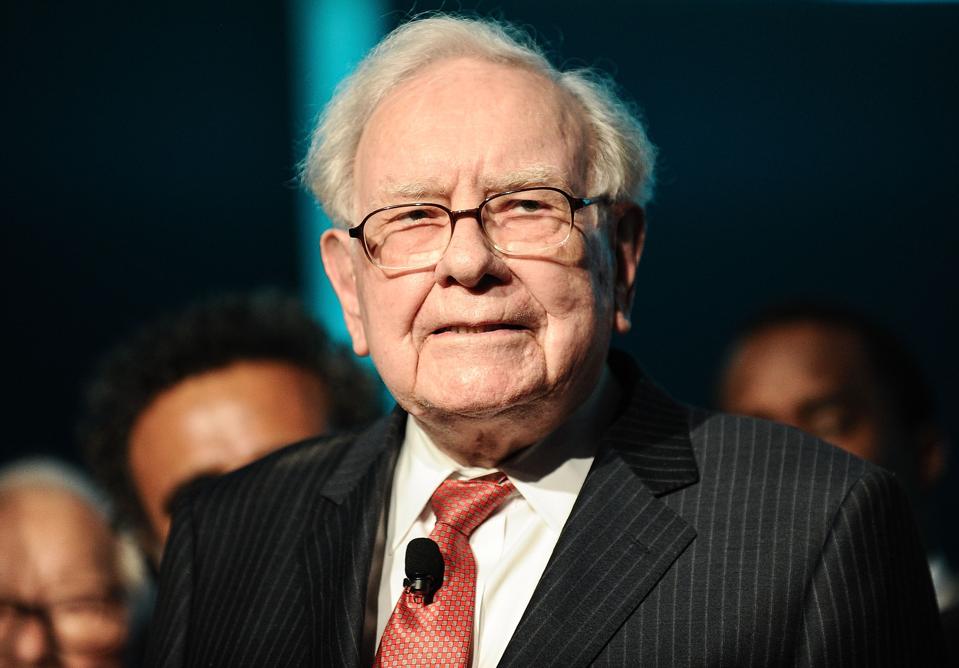
Forbes Media Centennial Celebration
(Photo by Daniel Zuchnik/WireImage)2017 DANIEL ZUCHNIK
Famed investor Warren Buffett ranks as the world’s third-richest person, with a net worth of $83.5 billion. The Oracle of Omaha has already given away $35 billion and has promised to donate more than 99% of his fortune when he dies.
But at 88, Buffett is still alive and well, and last month on CNBC, he announced another kind of giveaway. His annual March Madness bracket contest tips off next week with the men’s NCAA basketball tournament. First prize is $1 million a year for life for the person who can pick a perfect Sweet 16 in the tourney. One catch to enter the contest: You must be an employee at Berkshire Hathaway, where Buffett is CEO.
Berkshire is a sprawling conglomerate with nearly 400,000 employees across more than 60 companies. It ranked second in the U.S. and fourth in the world last year in the Forbes Global 2000, which combines the size ranks on market value, sales, profits and assets of the largest publicly traded companies. BNSF Railway (45,000 employees) and Geico (40,000 employees) are the largest Berkshire entities by head count; Berkshire’s headquarters has only 26 employees. Other top Berkshire brands include Clayton Homes, Duracell, Dairy Queen and NetJets.
The odds are extremely stacked against anyone getting the final 16 teams right. A string of upsets last year meant none of the 17.3 million ESPN brackets had a perfect Sweet 16. The previous year was better, with 18 out of 18 million ESPN brackets picking the Sweet 16 correctly, but that still made for a one-in-a-million longshot. Roughly 100,000 Berkshire employees completed brackets in past years.
With that in mind, Buffett added a “consolation” prize last year: The best performance over the first two rounds wins $100,000.
Last year, no Berkshire employees made it out of the first round alive. The final eight employee brackets were eliminated when No. 4 seed Wichita State lost to No. 13 Marshall, according to the Omaha World-Herald. Those eight employees split the $100,000 prize. Buffett says one employee picked 31 of the 32 first-round games correctly the previous year.
Buffett did his first March Madness challenge in 2014, in conjunction with mortgage company Quicken Loans. The contest was open to anyone and offered $1 billion for a perfect bracket, with the number of entries capped at 15 million. It was great marketing for Quicken Loans, thanks to more than a billion social media and news impressions for the brand. It was also a safe bet: The odds of picking a perfect bracket run as high as 1 in 9.2 quintillion (that’s 18 zeroes). The last three brackets in the contest were eliminated after 25 first-round games.
Berkshire employees need to get their 2019 brackets in before the first games begin on March 20. As for the rest of us, Warren is hiring.

2016/03/01

Buffett optimista: la economía de EEUU se recuperará en los próximos meses


Warren Buffett, presidente y CEO de Berkshire Hathaway.

Warren Buffett, presidente y CEO de Berkshire Hathaway.Foto: Bloomberg.EXPANSION
El multimillonario inversor estadounidense Warren Buffett criticó el "análisis negativo" y calificó de "completamente equivocados" a aquellos que dibujan un sombrío panorama económico para EEUU, en referencia a la actual campaña presidencial en el país.
"Como resultado de esta repetición negativa, muchos estadounidenses creen ahora que sus hijos no vivirán tan bien como ellos. Esa visión está completamente equivocada: los bebés nacidos en EEUU hoy serán la cosecha más afortunada en la historia", afirmó Buffet, consejero delegado de Berkshire Hathaway, en su habitual carta anual a sus accionistas divulgada este fin de semana.
En una entrevista hoy en CNBC, Buffett admitió que la economía parece algo "más débil" que lo anticipado hace unos meses, pero apuntó que se recuperará en los próximos meses y rechazó la preocupación por la volatilidad financiera.
El magnate de 85 años, conocido como el "oráculo de Omaha" por su inteligencia a la hora de invertir y anticipar el éxito empresarial, recordó que "durante 240 años ha sido un error terrible apostar contra EEUU".
"Ahora no es el momento de comenzar", aseguró el que es considerado la segunda persona más rica de EEUU, con una fortuna estimada de 62.000 millones de dólares, solo superado por el cofundador de Microsoft Bill Gates.
Buffett, que ya ha anunciado su respaldo a la aspirante a la candidatura presidencial demócrata Hillary Clinton, sale así al paso del discurso amenazador de aspirantes republicanos como Donald Trump, quien ha señalado que el liderazgo mundial del país está en entredicho y hace campaña bajo el lema de "Volvamos a hacer a EEUU grande de nuevo".
Reconoció, no obstante, que si bien los avances en productividad han ofrecido grandes beneficios a la economía, es cierto que algunos trabajadores se han quedado atrás.
"La respuesta a estas alteraciones no es restringir las acciones que aumentan la productividad. Más bien la solución pasa por un conjunto de redes de seguridad para ofrecer una vida decente a aquellos que quieren trabajar, pero encuentran que sus habilidades específicas tienen poco valor por las fuerzas del mercado", precisó.
Berkshire Hathaway, que posee participaciones en empresas como Walmart, American Express, Coca-Cola o Wells Fargo, registró en 2015 unos ingresos netos de 24.100 millones de dólares, un 21% más que en 2014.
www.df.cl

2015/11/08

10 libros que Warren Buffet cree que todos deberían leer

El segundo hombre más millonario del mundo recomienda una lista de libros de su propia selección.
warren buffette Photo/Nati Harnik
Cuando Warren Buffett comenzó su carrera de inversión, leía hasta mil páginas al día. Incluso ahora pasa alrededor del 80% de su día leyendo.
“Mi trabajo es esencialmente adquirir más y más y más información y hechos, para, ocasionalmente, ver si esto lleva a algún tipo de acción”, ha dicho Buffett.
“No leemos las opiniones de la gente. Queremos conocer los hechos y luego pensar”, agregó.
Para ayudarle a entrar en la mente de este inversionista multimillonario, Business Insider ha recopilado sus recomendaciones de libros de más de 20 años de entrevistas y cartas a accionistas.
  • 'The Intelligent Investor' (El inversor inteligente), de Benjamin Graham.
  • 'Security Analysis' (Análisis de Seguridad), por Benjamin Graham y David Dodd L.
  • 'Common Stocks and Uncommon Profits' (Acciones ordinarias y beneficios extraordinarios), por Philip Fisher.
  • 'The Essays of Warren Buffett' (Los ensayos de Warren Buffett), por Warren Buffett.
  • 'The Clash of the Cultures' (El choque de las culturas), por John Bogle.
  • 'Business Adventures: Twelve Classic Tales from the World of Wall Street' (Aventuras de negocios: Doce cuentos clásicos del lobo de Wall Street), por John Brooks.
  • 'Essays in Persuasion' (Ensayos de persuasión), por John Maynard Keynes.
  • 'The Little Book of Common Sense Investing' (El librito sobre cómo invertir con sentido común), por Jack Bogle.
  • 'Poor Charlie's Almanack' (El almanaque del pobre Charlie), editado por Peter Kaufman.
  • 'Dream Big' (Un gran sueño), por Cristiane Correa.
Revise el listado completo en Business Insider.

2015/06/16

Si las elige Buffett, por algo será: sus apuestas en acciones que dan dividendos

Coca-Cola, Wells Fargo e IBM están entre las empresas con los mayores dividendos.

Si Warren Buffett apuesta por algo, hay tenerlo en cuenta. El inversionista privilegia las acciones que dan dividendos pero, curiosamente, Berkshire Hathaway, su vehículo de inversión no los entrega. Muchas de las principales empresas donde está presente el “oráculo de Omaha” tienen los dividendos más sólidos del mercado.
¿Cuáles son éstas? Según una publicación de Time, Coca-Cola es una de las posiciones más emblemáticas que tiene el millonario inversionista y la hace una de las favoritas a la hora de analizar dividendos, los que han ido aumentando año tras años en los últimos 52 años con una rentabilidad por dividendo de 3,3% de los precios actuales.
Las otras acciones favoritas de BuffettWells Fargo es el banco favorito de Buffett, y también la mayor posición en la cartera de inversiones de Berkshire Hathaway. La empresa tiene una política simple y una asignación de capital de bajo riesgo, lo que la convierte en una fuerte opción para los que buscan alternativas racionales en el sector bancario.
La entidad financiera tuvo que cortar su reparto de utilidades durante la crisis de 2009, pero compensó a los inversores, rápidamente, con crecientes dividendos desde entonces. Lo que era un pago trimestral de US$ 0,05 en el año 2010 se ha convertido en uno de US$ 0,375, y Wells Fargo está pagando actualmente un 2,7% de rendimiento en distribución de ganancias.
Warren Buffett normalmente se mantiene alejado de las empresas tecnológicas, pero hizo una excepción con IBM, al invertir por primera vez en la compañía en 2011, aumentando su posición de forma paulatina desde entonces. Debido a su presencia y relaciones establecidas con los principales clientes corporativos en todo el mundo, IBM es particularmente sólida en la industria de la tecnología, y la gestión se ha traducido en las fortalezas de la compañía en el crecimiento de los dividendos para los inversionistas a largo plazo.
IBM ha repartido dividendos sin interrupciones desde 1916, y ha aumentado los pagos en los últimos 20 años consecutivos. Éstos, además, se han duplicado en los últimos cinco años, e incluye dividendos de 18% para 2015. Después del último incremento, IBM está pagando una rentabilidad por dividendo del 3%.
El caso de Berkshire HathawayLas empresas que crecen con los dividendos son, por lo general, las que tienen una gran solidez para enfrentar los ciclos económicos, así como la fortaleza para proteger las ventas y flujos de efectivo. Por ello no es de extrañar que muchas de las acciones de Buffett también sean pagadoras de dividendos.
Berkshire Hathaway es la excepción. La empresa no tiene una política de dividendos establecida; sin embargo, esto está relacionado con el modelo de negocio que tiene y el talento de inversión de Warren Buffett.
Berkshire está en el negocio de asignación de capital, la empresa genera mucho más dinero de lo que necesita para reinvertir en sus operaciones, pero Buffett conserva esos montos para poder asignarlo a las nuevas oportunidades de inversión que aparezcan.
Para una empresa como Coca-Cola, lo que hay que hacer con los excedentes que hay en los flujos de caja es distribuirlos entre los inversores. Sin embargo, esos excedentes en Berkshire Hathaway están mejor cuidados si dejan en manos de Buffett, el cual los coloca a trabajar y logra sacarle una mejor rentabilidad en el tiempo, según Time.
Berkshire Hathaway no paga dividendos, pero eso es sólo porque un hombre como Warren Buffett puede poner ese dinero y darle un mejor uso.
www.df.cl

2015/06/12

El almuerzo de US$ 2,3 millones de Warren Buffett

La empresa china de juego online, Dalian Zeus Entertainment, ganó la subasta organizada por eBay para compartir mesa y mantel con el inversor norteamericano.

Por Expansión, España
El almuerzo de US$ 2,3 millones de Warren Buffett
La empresa china de juego online Dalian Zeus Entertainment ha ganado la subasta organizada por eBay para compartir mesa y mantel con el inversor norteamericano. El récord se registró en 2012, y su protagonista aún permanece en el anonimato.
No era una empresa conocida más allá de las enormes fronteras chinas. Pero ha bastado un cheque de US$ 2,34 millones (2 millones de euros), una subasta en eBay, un filete en el restaurante Smith & Wollensky de Nueva York y el magnetismo de Warren Buffett para que Dalian Zeus Entertainment se haya dado a conocer en todo el mundo.
La empresa de juego online dirigida por Zhu Ye ha ganado este año la subasta organizada por eBay para compartir un almuerzo con Warren Buffett, presidente y fundador del conglomerado empresarial Berkshire Hathaway.
Los US$ 2,34 millones que ha destinado la empresa china al que, probablemente, será el almuerzo más caro de su historia superan los resultados de las subastas de los últimos dos años, pero aún quedan lejos del récord de 2012, cuando un inversor anónimo pagó US$ 3,45 millones por sentarse en la mesa de Buffett.
Fundación
El conocido como oráculo de Omaha organiza esta subasta desde 2010 con fines benéficos. La inversión de Dalian irá a parar directamente a la fundación Glida, que ayuda a las personas más necesitadas de la ciudad de San Francisco.
La subasta Buffett capta especialmente la atención de los inversores asiáticos. Andy Chua, de Singapur, ganó la puja el año pasado con 2,16 millones de dólares. En 2009, el gestor chino de hedge fund Zhao Danyang pagó 1,7 millones y se llevó el asiento en el Smith & Wollensyky.
Pero los millonarios americanos también quieren tener la oportunidad de escuchar las enseñanzas del tercer hombre más rico del mundo. En 2010 y 2011, el gestor de fondos Ted Weschler comió con Buffett tras pagar 2,6 millones cada año.
www.df.cl

2015/05/20

Here's how much Warren Buffett spends on his haircuts

  • by 
  •  
  • Warren Buffett, the 84-year-old head of Berkshire Hathaway, may be a billionaire. But he doesn’t spend like one.
    He famously still lives in the Omaha, Nebraska, house he bought in 1958 for $31,500.
    And, according to a new story by Market Watch, he’s a long-time patron of Omaha barber Stan Docekal—who charges him $18 (tip not included) for a hair trimming every two or three weeks.
    Docekal, who has cut Buffett’s hair for about 23 years, is also in his early 80s. Desperate to pick up tidbits about the Oracle of Omaha, journalists have interviewed the barber many times over the years. Apparently Buffett’s activities during haircuts includelistening to oldies musicwatching CNBC, and reading the his mail, a newspaper, or an annual report.
    Is $18 a good deal?
    Technically it’s higher than the national average of about $14 for a men’s cut, according to a recent study. But it’s pretty darn cheap for the third richest person in the world.
  • 2015/03/09

    Here's why Warren Buffett, Oprah Winfrey, and Bill Gates love to read

     
    There is no formulaic, step-by-step process when it comes to achieving success. 
    However, there does seem to be one unifying trait that incredibly successful people share: they all read, a lot.
    In a recent LinkedIn post, Andrew Collins, CEO of Mailman Group, explored this commonality between Warren Buffett, Oprah Winfrey, Bill Gates, and other successful people.
    Collins highlights what three powerful billionaires have said about reading: 
    • Investor Warren Buffett estimates that 80% of his working day is dedicated to reading and reflecting. He is famously quoted as saying, "I just sit in my office and read all day."
    • Media giant Oprah Winfrey began reading as a toddler and never stopped: "Books were my pass to personal freedom. I learned to read at age three, and soon discovered there was a whole world to conquer that went beyond our farm in Mississippi."
    • Cofounder of Microsoft, Bill Gates, credits his success to books: “I really had a lot of dreams when I was a kid, and I think a great deal of that grew out of the fact that I had a chance to read a lot.”
    Collins explored five key benefits of reading. Here are three:

    1. It drives you to emulate other successful people. 

    "By reading a lot about someone you admire you’re exposed to their experiences, influences, and success. It’s a great first step in that direction," Collins says.

    2. It sparks ideas.

    "Ideas are generated by other ideas," he explains. "The more you read, the more your mind is mapping, connecting and solving problems."

    3. It helps you relax.

    "Reading is a great way to relax the mind, dive deep into a subject and really learn," says Collins. "It also helps you to slow down, see things clearer, and take a breath."
    Read the full LinkedIn post here.


    Read more: http://www.businessinsider.com/warren-buffett-oprah-winfrey-and-bill-gates-all-share-this-pastime-2015-3#ixzz3TvQC24G9

    2015/03/08

    15 reasons Warren Buffett is $72 billion richer than you, in one chart


  • by 
  •  
  •  

  • What has made Buffett the most successful investor of all time? Many things.

    If you’ve always wanted to know who Warren Buffett is and how he got so rich, this was the week for you!
    Nearly 50 years ago, Warren Buffett and his investors took control of the textile mill company Berkshire Hathaway. You probably know what happened after that. Berkshire  BRK.A -0.31%  has become a hugely successful conglomerate, and Buffett’s investment vehicle. And Buffett has become the world’s second richest man.
    To mark the anniversary, Buffett included a special section in his annual letter to shareholders, which came out last Saturday, about his past 50 years in business. Responding to Buffett’s special section, nearly everyone on the Internet wrote a think piece on what has made Buffett the most successful investor of all time. (Well, not everyone. But many financial journalists.) In response to all those posts, I have collected all of the reasons everyone came up with and put it all in one chart.
    What does my chart say? A lot! Part of the allure of Warren Buffett is that he makes what he does sound so simple. He buys good companies at fair prices, says Joe Nocera at The New York Times, and he doesn’t get taken in by the latest investing fad. The lesson to learn from Buffett is to be yourself, says Barry Ritholtz. It’s easy.
    But look at the chart! There are nine bubbles, 15 potential reasons he’s so rich, and not a lot of overlap. Look at the middle of the chart. Matt Levine of Bloomberg says Buffett is successful because he buys and sells stocks. (Also because he is so “cuddly.”) Right next it: A bubble for an article fromLex Haris at CNNmoney that said that if you want to be rich like Buffett, the key thing to do is buy and hold, i.e. never sell. Buffett is successful because he is able to do a lot of stuff really well. And he’s able to do contradictory stuff, again really well.
    Second, Buffett is often thought of being the best investor to ever walk the planet. But if you look at the chart, the bubbles are doubled up and much more crowded on the right side. That suggests that more of Buffett’s success—or perhaps just how his success is perceived by financial journalists—seems to be on account of his personality, not his ability to pick stocks.
    If anything, the chart suggests that Buffett has been so successful because he is willing to be flexible. In his letter to shareholders, as Andrew Ross Sorkin points out, Buffett warns that Wall Street and investment bankers are always trying to get companies to do foolish things, like bad acquisitions or spin-offs, just to earn a fee. Buffett says most companies and managers would be better off ignoring investment bankers. Yet one of Buffett’s largest investments is Goldman Sachs, which is filled with bankers trying to get companies to do things so they can collect fees. That might make Buffett seem a bit hypocritical, but isn’t the world better off because Buffett is willing to point out the problems of Wall Street even if he also knows there are profits to be made?
    It’s also important to learn from your mistakes. Buffett is the original activist investor. He took over Berkshire and tried to run it himself. And it was a disaster. That is likely what led him to the hands-off strategy that has made every other business that Berkshire has bought such a success. Buffett is fortunate to have experienced such fallout early enough in his career that he could bounce back.
    Staying flexible, taking advantage of your good fortune, and being willing to learn from your mistakes. Like most things you can learn from Buffett, all of those items serve as pretty good life advice. And these three items will probably make you a better investor, businessperson, and perhaps even richer; though $72 billion richer is probably a stretch.
    Graphic by Analee Kasudia.

    2015/02/28

    Warren Buffett says Berkshire's railroad BNSF 'disappointed' in 2014

  • by 
  •  

  • In his annual letter to shareholders, Buffett calls attention to the railroad company’s struggles with late shipments.

    One of Warren Buffett’s biggest investments had a disappointing year, at least according to Warren Buffett.
    In his annual letter to shareholders, the Berkshire Hathaway CEO said that the story in 2014 for BNSF, the giant railroad company that Buffett’s insurance conglomerate bought in 2009, was “not good.”
    “The railroad disappointed many of its customers,” writes Buffett.
    The comments mark an about-face from last year’s letter, when Buffett compared the railroad’s cargo shipping prowess to that of Noah, the bible’s shipping superstar. “America’s rail system has never been in better shape,” Buffett wrote a year ago.
    However, in the past year, BNSF has come under harsh criticism for a growing number of late shipments. Many railroad companies were hit with complaints last year, but BNSF appears to have received more than most. More than four dozen industry groups, law makers, and commodities firms lodged complaints with the U.S. Surface Transport Board about BNSF last year. Some even asked the regulator to take action against the railroad company.
    Many have said the delays are probably due to a surge in demand from U.S. oil frackers, which are using railroads to move more and more of their output. And some have accused the railroad companies of bumping the shipment of other freight in favor of crude, which generally commands higher shipping rates. But BNSF says oil still accounts for a relatively small portion of its overall shipments. Still, the worst delays took place along the company’s northern routes, which run right through U.S. shale country.
    Buffett says the weather, which was particularly harsh last year (remember the Polar Vortex?), played a role. But Buffett says the railroad should have done better. In his letter to shareholders, Buffett called attention to BNSF’s plan to spend $6 billion on improvements in 2015, which he said was 50% more than any other railroad has spent in a single year. Just the same, it’s only an increase of $1 billion from what BNSF spent in 2014 on new trains and track upgrades. And Buffett said the expenditures were already paying off. He said that BNSF’s performance metrics were significantly better in the fourth quarter than they were a year ago.
    Buffett’s rebuke aside, BNSF didn’t spell disaster for Berkshire’s shareholders in 2014. The company earned nearly $4 billion, up 2% from a year ago. To be sure, that was much slower than the 13% jump in profits the railroad experienced the year before.
    While Buffett had harsh words for BNSF, there is nothing in his letter about the labor disputes at Berkshire-owned NetJets, nor is there any mention about the other problems at Berkshire subsidiaries that have made headlines in the past year. In September, Fortune reported on the troubles Berkshire has encountered with paint company Benjamin Moore.
    Overall, BNSF has been a very good investment for Buffett. Berkshire bought the company for $26 billion in 2009. Last year, BNSF had revenue of $23 billion and profits over the past three years of just over $11 billion. Buffett says BNSF now carries 15% of all inter-city freight, which he says is more than anyone else—by land, air, or sea.
    Elsewhere in the letter, Buffett admits that he has made some acquisition mistakes. “Fortunately, my blunders normally involved relatively small acquisitions,” writes Buffett. “Our large buys have generally worked out well and, in a few cases, more than well.”

    Warren Buffett on his successor: We have our man

  • by 
  •  

  • Spoiler alert: Once again, Buffett has not revealed who the next CEO of Berkshire Hathaway will be in his letter to shareholders. But he does say more on the subject than he has in the past.

    Warren Buffett’s successor is in the house. But that’s all the CEO of Berkshire Hathaway is saying.
    Once again, in this year annual letter to Berkshire Hathaway  BRK.A -0.48%  shareholders, Buffett has not unmasked who the next CEO will be. But he does say as definitively as ever that the person has been picked and he has revealed a little bit more about who he is. (Buffett has already confirmed in the past that the next CEO of Berkshire will be a man.)
    That’s more than Buffett has said in the past. But the fact that, once again, the next CEO of Berkshire has not been named may come as a disappointment to some.
    This year’s letter is the 50th Buffett has written as the chairman and CEO of Berkshire Hathaway. And, as promised, a section of the letter is titled, “The Next 50 Years at Berkshire.” Some had speculated that meant Buffett would take the opportunity to name his successor. Some have said the fact that he hasn’t has been a drag on the company’s stock in the past, though it’s hard to see evidence of that. Berkshire’s shares were up 27% in 2014, about double the market in general.
    In his clearest statement on the subject so far, Buffett writes in this year’s letter, “Both the board and I believe we now have the right person to succeed me as CEO – a successor ready to assume the job the day after I die or step down.”
    In previous annual letters, Buffett has said that Berkshire’s board knows who he would pick for CEO should that person be needed immediately. But he has left the door open to changing his mind later on. Buffett now appears appears to have closed that door.
    Buffett also says for the first time that the next CEO of Berkshire will be someone who already works at the company. He says that was a requirement of Berkshire directors. In the past, Buffett has said only that his pick for the next CEO of Berkshire is someone the company could put into that position in a flash, not that his chosen successor was already an employee of the company.
    Buffett also puts a very loose age range on the next CEO. He writes in this year’s letter that Berkshire’s directors believe the next CEO should be someone relatively young, who can be expected to run the company for at least 10 years. But Buffett says he doesn’t expect the board to pick someone who is likely to retire at 65, giving some wiggle room to how “relatively young” this person may be.
    Buffett also says that his successor will be “vigilant and determined” at warding off the “ABCs of business decay, which are arrogance, bureaucracy and complacency.” Buffett says those are the three sins that have brought down companies that once sat “atop huge industries” but through bad behavior fell to depths their CEOs didn’t think possible. It’s noteworthy that Buffett includes General Motors  GM -0.67%  and IBM  IBM 0.67%  in that group, two stocks that are currently in Berkshire’s portfolio.
    So, there you have it. Berkshire’s next CEO will be a 55-ish man who currently works at Berkshire and is not prone to mucking up what Buffett has built over the past 50 years. If you fit that description, congrats!
    In the past, Berkshire watchers have kept a careful watch on which top lieutenants gets the most mentions in Buffett’s annual letter. This year, the clear winner is Ajit Jain, who runs Berkshire Hathaway’s largest insurance division. “[Jain’s] mind, moreover, is an idea factory,” Buffett writes in the letter. But at 63, Jain may be a little too old for the job, if Buffett sticks to his prescribed age range.
    Todd Combs and Ted Weschler, Buffett’s back up investment managers, get a mention in the letter and praise for their investing abilities. And Buffett says he has handed over a bit more control to them. Buffett says both managers have been given one of Berkshire’s smaller companies to look after and both are taking on the title of chairman of those firms. But, unlike in previous years, Buffett says nothing about the performance of Combs and Weschler’s investments in 2014. Fortune calculated that both lagged the market for the first time since joining Berkshire.
    Buffett makes no mention in this year’s letter of Matt Rose, the chairman of BNSF, who Buffett has praised in previous letters and some have speculated is a front runner for the CEO job. Perhaps that’s ecause BNSF had a disappointing 2014, or perhaps Rose, 55, is out of the running. Only Buffett, and Berkshire’s board, knows.