LISTEN TO THE PODCAST:
Penn's Dorothy Kronick and Alejandro Velasco from NYU discuss potential solutions to Venezuela's deepening crisis.
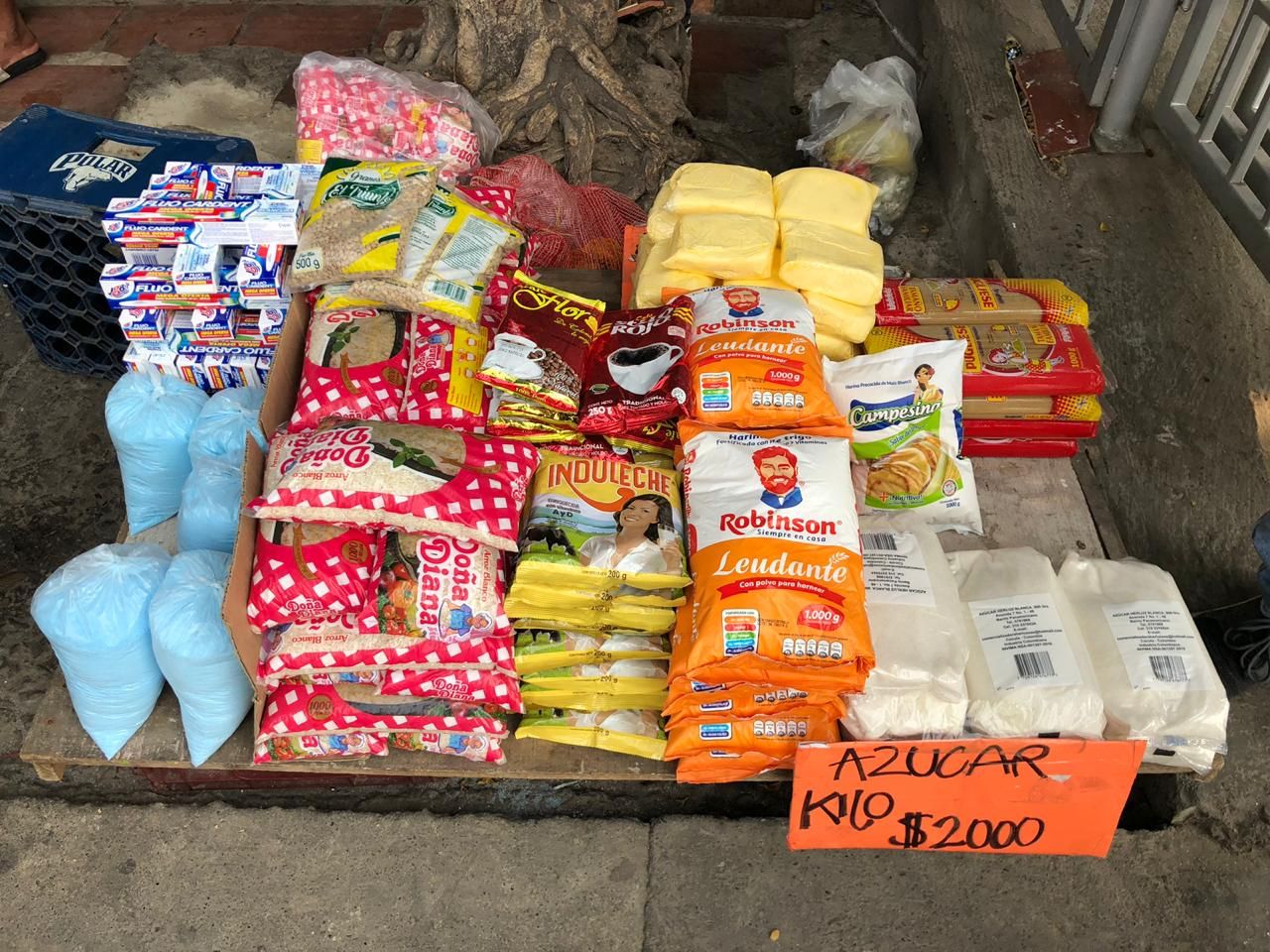
As the political and economic crisis in Venezuela grows worse it has become a tinderbox. With food and medicine shortages already acute, President Nicolas Maduro’s blockade to keep humanitarian aid from entering the country – and protesters’ reactions — have led to four deaths and hundreds injured in clashes with the military in recent days. Added to this quagmire are not-so-veiled threats of military intervention from the U.S., stirring an already chaotic mix.
Yet, experts who spoke with Knowledge@Wharton say there are viable ways of resolving today’s grave issues that could improve the lives of Venezuelans and heal the economy — without violence. But that can happen only if cooler heads can prevail and one side does not insist on controlling most, or all, of the country’s vast economic potential. Those experts include Philip M. Nichols, Wharton professor of legal studies and business ethics, Dorothy Kronick, a professor of political science at the University of Pennsylvania, and Alejandro Velasco, a professor at New York University. Kronick and Velasco shared their views on the Knowledge@Wharton radio show on Sirius XM. (Listen to the podcast at the top of this page.)
Do Sanctions Do the Job?
The U.S. sanctions on Venezuela, in force since March 2015, could cripple the Venezuelan economy further should the U.S. decide to add more restrictions, the experts said. On Monday, U.S. Vice President Mike Pence slapped U.S. sanctions on four Venezuelan governors who are close to Maduro. He also called upon leaders in the region to restrict Maduro’s sources of funds by freezing the assets of Venezuela’s oil company PDVSA.
Pence also met with Venezuelan opposition leader Juan Guaido, assuring him that his claim to be the legitimate president of the country has “100%” support from the Trump administration. Guaido has said he wants countries supporting him to consider “all options” to deal with Maduro, and Pence announced an additional $56 million in U.S. aid for the Venezuelan people.
Yet more sanctions could prove to be a devastating blow. “As abysmal as the state of the Venezuelan economy is, the reality is it can get worse,” said Kronick. She noted that Venezuela’s import bill this year is an estimated $11 billion, which is nearly as much as the $12 billion it spent on imports last year.
She added that “famine and deaths from malnutrition are a very realistic scenario that we need to work to try to avert.” Velasco agreed, adding, “It’s baffling why there is this tremendous push towards an all-or-nothing strategy which is so short-termist and relies on increasing the suffering of Venezuelans on the ground as a way to be able to further legitimize increasing action.”
Staging a Recovery
Nichols had some advice for how the country could prepare for an economic recovery.
“First and foremost, opportunity has to be distributed in an equal way,” he said. “If the exigencies of Venezuela are used as an excuse to return to the economic structures of old, Venezuela will collapse again. The people of Venezuela are not likely to long support a return to ‘the good old days’ when only a handful of Venezuelans controlled most of the country’s wealth.”
“Maduro’s efforts to blame the economic crisis on intervention from the U.S. gains more credibility as the U.S. imposes sanctions and takes other actions to put pressure on the Venezuelan economy.”Dorothy Kronick
Next, a new regime should use oil revenues to tame inflation “long enough to allow markets to kick in,” so that food and medicine can start coming in through regular channels. Third, legal foundations must be set up allowing for the return of some of the means of production to private hands, he added. “Venezuela should try to avoid the chaos experienced by countries such as Iraq, where thousands of people made claims on oilfields and other assets, and the ensuing confusion delayed use of those assets and opened a window that enabled the corrupt transfer of many of them.”
It is going to take a while to rebuild Venezuela, Nichols believes. “Perhaps the best path the new government could take would be to position themselves as a caretaker government and to very transparently prepare the country for new elections — and to refrain from running for any elections themselves,” he said. “The new government could also prepare critical industries for a transition but should refrain from disposing of any of them, perhaps placing them in a collective trust managed by experienced outsiders. It should definitely refrain from taking retributive actions.”
Nichols noted that a new government in Venezuela will face obstacles from bureaucracies and government agencies that will continue to house Maduro supporters. “The bureaucracies in Venezuela are riddled with corruption,” he said. “Again, perhaps the new government should embrace a caretaker role and simply ask bureaucrats to commit to free and open elections so that the people of Venezuela can express their wishes. The new government could also take advantage of its window as a caretaker to create a permanent, independent and empowered anti-corruption agency. Such an agency would be a great legacy from the caretaker government’s time in office. The new government should earn a mandate from the people, not just claim it by fiat.”
Nichols said reprisals against the Venezuelan military would be destabilizing. “Chile, Argentina, even Peru offer examples of transitions from far more brutal regimes, transitions that involved compromise but offered stability,” he added. “Venezuela would not have to do exactly the same but could take lessons from those transitions. In the meantime, perhaps some respected military leaders from before [former president Hugo] Chavez could take caretaker leadership roles, perhaps alongside a civilian panel with a limited oversight role.”
Reinforcing Maduro’s Narrative
U.S. moves to push Maduro into a corner with sanctions may be backfiring, because such actions lend credibility to Maduro’s claim that the U.S. is responsible for much of Venezuela’s problems.
According to Velasco, “all [Maduro] really needs is to have somebody to be able to blame.” He said Maduro is able to spread fears that the U.S. wants to intervene in Venezuela and convert that into support for him within the country. “Unfortunately the U.S. is doing everything in its power to make that blame increasingly realistic,” he added.
Kronick sees Maduro enjoying “wide support” within the country. “Maduro’s efforts to deny the existence of an economic crisis or blame all the economic problems on the U.S. have not convinced the vast majority of the Venezuelan people,” she said. “[However], Maduro’s efforts to blame the economic crisis on intervention from the U.S. gains more credibility as the U.S. imposes sanctions and takes other actions to put pressure on the Venezuelan economy.”
“It’s baffling why there is this tremendous push towards an all-or-nothing strategy which is so short-termist and relies on increasing the suffering of Venezuelans…”–Alejandro Velasco
Kronick said that while the probability is “quite low” of having U.S. troops on Venezuelan soil, the “saber rattling” by U.S. officials and politicians doesn’t help matters. She pointed in particular to Republican Senator from Florida Marco Rubio and his tweets, and also remarks by President Trump, the U.S. special representative to Venezuela Elliot Abrams, and U.S. national security advisor John Bolton.
Velasco pointed in particular to Rubio’s tweets where he posted pictures of a bloodied Libyan dictator Muammar Gadhafi, suggesting that Maduro could face the same fate. “It undermines the efforts on the part of some sectors of the [Venezuelan] opposition to be able to pry out some carrots to the stick of trying to effect mass defections from the military,” he said. “On one hand you’re encouraging the military to try to defect, whether it be through amnesty or other kinds of moves, and on the other hand you’re saying, ‘If you don’t defect we’re going to kill you; this is your fate.’ That undermines the carrot part of the equation.”
“These overt threats and statements — for example, by Trump — that if the Venezuelan military doesn’t remove Maduro they will lose everything … make Maduro’s statements about the specter of U.S. military intervention more credible,” Kronick said. Even if Maduro is removed and the Venezuelan army destroyed in a military intervention, it could lead to “a protracted and deadly conflict” with many non-state armed groups in the country, she added.
Walking a Thin Line
“The U.S. government has to walk this very delicate, difficult line in which on the one hand they’re trying to threaten military intervention convincingly enough to scare the Venezuelan military into removing Maduro,” Kronick said. “On the other hand, it doesn’t want to create the impression with the international community that this is actually on the table because that will rapidly erode international support for a political transition in Venezuela.” That is important because the European Union, Canada and others that are willing to get involved want a politically negotiated solution, she explained.
However, the experts said little could be expected from either Venezuela’s opposition in terms of ensuring a smooth transition to a healthier economy, unlike the chaos that followed U.S. actions in Iraq, Afghanistan and Libya. The Venezuelan opposition is “consistently underestimating the strength or the lengths to which the Maduro government recently — and before that the Chavez government — would go to …” and also the strong base of support it has, said Velasco.
Overstated Hopes of Military Desertions
Hopes of goading more members of the Venezuelan military to desert Maduro appear overly optimistic – even misplaced — as evidenced by the small number that has actually defected in recent weeks. “Maduro has brought more and more of the military into the fold of his regime,” said Velasco. “That has been done through either providing opportunities for illicit enrichment or just more direct ties to the inner and the upper echelons of the government.”
Kronick noted that many in the international community expected mass desertions from the Venezuelan military after Guaido took the oath of office as interim president of the country. But the actual defections – between 60 and 100 – were far fewer than what Guaido and the U.S. were hoping for, she said.
How Best to Deliver Aid
Even as the Venezuelan crisis worsens, there is strong criticism of perceived attempts to use humanitarian aid as a political wedge to bring about a regime change in Venezuela. The International Red Cross and other humanitarian organizations “have rejected the way in which this aid has been turned towards larger purposes, which is regime change,” said Velasco.
“We need to be very careful about regime change,” Nichols noted. “The U.S. has a long history of forcing regime change in Latin America, and it usually does not work out well for the local people.”
Nichols hoped that military intervention is not an option. “Venezuela has the support of China and Russia,” he said. “If force is used against Venezuela today, Russia will have a base in Caracas tomorrow. With missiles.”
Meanwhile, Kronick said it is critical to find a way for aid to reach Venezuela’s people in a scenario where Maduro stays in power. “The Venezuelan economy has already been devastated and now is further weakened by these very punitive U.S. sanctions that essentially cut the government off from international financial markets, and make it very difficult for the government to make money selling oil,” she added. “There needs to be a Plan B for how to prevent a famine in Venezuela if we don’t see the political transition that many are hoping for.”
With respect to humanitarian aid, it would be possible to find a politically negotiated solution, according to Nichols. “In the short run, if the actors stopped grandstanding, it could be done,” he said. “Aid could be sent to Venezuela through a third party acceptable to all, perhaps Bolivia or Panama, rather than sitting on the border with the vice president of the U.S. at the head of the column.”
“Opportunity has to be distributed in an equal way. If the exigencies of Venezuela are used as an excuse to return to the economic structures of old, Venezuela will collapse again.”–Philip Nichols
Nichols said there are “important political reasons” for why Latin American countries may be convinced to get humanitarian aid to the people of Venezuela. “The mass exodus from Venezuela is creating the Latin American version of the immigrant crisis that overwhelmed European politics. Getting food and medicine to people in Venezuela might allow some of them to stay and ease the pressure a little bit,” he explained. “If the aid came through a country that Venezuela helped when it was oil rich, then Maduro could accept it gracefully as a return of Venezuela’s previous generosity.”
No Quick Fix
Velasco noted that the international group led by the European Union has been open to a “peaceful transition that allows Chavismo (a left-wing political ideology adopted by Chavez) some role to play in a future Venezuela.”
Kronick said that in order to achieve a peaceful transition out of the current mess, it may be necessary to allow a role in the new setting for Chavistas, or members of the Chavismo movement that Maduro identifies with, or even Maduro himself.
Nichols said that he favors a regime change in Venezuela because he did not see the Chavistas taking the necessary measures to bring prosperity and well-being to the people. “The people of Venezuela, even the vast numbers that enthusiastically support the Chavistas, suffer mightily under the Chavista administration,” he added. “But unless something changes, we are all better off if regime change is encouraged rather than forced.”
At the same time, removing Maduro and the Chavistas would not be “a panacea,” said Nichols. Most Venezuela watchers expect that the country would need “about 20 years to reasonably recover,” he added. “The Chavistas have been in power for 20 years; that cannot be undone overnight.”
http://knowledge.wharton.upenn.edu