LISTEN TO THE PODCAST:
Reporter John Carreyrou talks with K@W and Wharton's Peter Conti-Brown about the downfall of Theranos.
 Elizabeth Holmes had the world on a string. In 2003, the 19-year-old college dropout founded Theranos, a medical technology company that promised to revolutionize health care with a device that could test for a range of conditions using just a few drops of blood from a finger prick. Holmes, a striking blonde with a bold presence, racked up big-name investors, forged a partnership with Walgreens and raked in the money: Theranos reached a valuation of $9 billion.
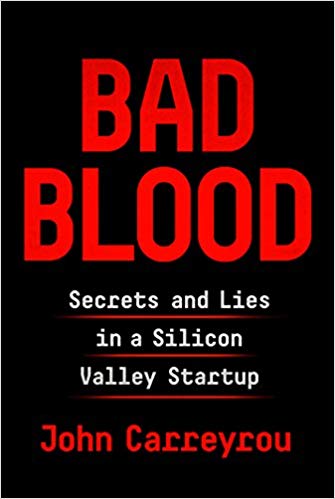
But this story of a Silicon Valley unicorn was too good to be true. An investigation by Wall Street Journal reporter John Carreyrou uncovered the truth that led to the company’s downfall. Holmes and former Theranos president Ramesh “Sunny” Balwani have been indicted on federal fraud charges. Carreyrou has chronicled the saga in a book titled, Bad Blood: Secrets and Lies in a Silicon Valley Startup. He visited the Knowledge@Wharton radio show, which airs on Wharton Business Radio on SiriusXM, to talk about the story. Wharton business ethics and legal studies professor Peter Conti-Brown, who teaches about Theranos for the business responsibility core class for Wharton MBAs, also joined the discussion.
An edited transcript of the conversation follows.
Knowledge@Wharton: Journalists often get tips from their sources. In this case, your investigation began with a tip from a friend of a friend, correct?
John Carreyrou: Yes, it was not a primary source. I got a tip from a pathologist in the Midwest who moonlighted as the writer of a blog called “The Pathology Blawg.” He had read a profile of Elizabeth Holmes in The New Yorkerand was immediately dubious about the claims she made in that story about her technology’s ability to test tiny blood samples and to run so many tests on tiny blood samples. He wrote a short, skeptical item on his blog and was contacted by someone who had been involved in patent litigation with Elizabeth Holmes.
That person, Richard Fuisz, had become suspicious that Theranos was a scam. Fuisz had just made contact with a Theranos employee who had just left the company, and the employee was the former lab director. The employee was alleging all manner of wrongdoing. I was cognizant of the fact that the first person who tipped me off was removed by several degrees from the primary source of information. But I heard that there was this primary source of information out there, and if I could just get in touch with this person, then I might be able to get somewhere. That’s what I did.
I eventually got in touch with the former lab director and had a long first conversation with him. Based on that first conversation, I became convinced that this was a fraud, and it became a game of corroboration from there.
Peter Conti-Brown: That understates the extraordinary lengths you went to to confirm all of this. I had been teaching Theranos in the business responsibility core class for Wharton MBAs since John broke the story in October 2015. When the book came out, I’ve got to say I read it in about two sittings. It’s an unbelievably gripping tale. To find parallels to it without becoming hyperbolic, it really reads like Woodward and Bernstein’s All the President’s Men, or to go back further, to Ida Tarbell’s taking on Standard Oil.
But John, I’ve got a question for you. You’ve got a wonky policy blog that comes to you from almost a litigation addict, who has all of the reasons in the world to try to rake Elizabeth Holmes and Theranos over the coals. Talk to us a little bit about how you got from there to the process of eventually unraveling this whole thing. Were your instincts pointing in the other direction?
Carreyrou: No. I was very well aware that Richard Fuisz, having been involved in litigation and having lost that patent litigation, was a biased source and had an axe to grind. But I also quickly became aware that he had once been a source — 20, 25 years prior — of a colleague of mine who had written a couple of front-page stories using Fuisz. And I knew from having talked to my colleague, who was still at The Wall Street Journal, that Fuisz, as colorful of a character and vainglorious as he was, was also a real medical inventor and entrepreneur.
Moreover, his suspicions tracked with my first impression because, like the pathology blogger, I had read The New Yorker profile of Elizabeth Holmes and had immediately found some things in that story odd. One in particular was the notion that, as a 19-year-old Stanford dropout with zero formal training in medicine or lab science, she could create new technology for blood testing that would completely change the face of that industry. I knew that sort of thing happens in the computer industry, but my coverage of medicine over the previous 10 years told me that it didn’t work that way in the medical world.
“Why did everyone get taken in? I think it was because Elizabeth Holmes is actually very intelligent and a remarkable pitch woman.”
So, that had made me suspicious, and then the blogger, who knew a thing or two about blood testing, had the same instincts that I did. I wasn’t inclined to dismiss what Richard Fuisz was saying. Of course, if he hadn’t just made contact with that former Theranos employee who was a lab director, then I might have approached the situation differently and more skeptically. But the fact that I knew from the get-go that there was a primary source of information out there who was a former employee changed everything.
Knowledge@Wharton: Did you think that there was no way this machine could work the way this startup claimed it could?
Carreyrou: Right. They did try to implement Elizabeth Holmes’s vision, which was a tiny pinprick of blood from the finger and you could run the full range of lab tests on it. That means anything from several hundred tests to several thousand tests. They tried to make it happen. The first iteration of the technology was a microfluidic system. It was the most ambitious thing they tried, and they tried that for several years and couldn’t get anywhere.
Then they pivoted to a more rudimentary machine that was essentially a converted glue-dispensing robot. This Theranos engineer orders a glue-dispensing robot from a company in New Jersey, then affixed a pipette to the robotic arm and programmed the arm to mimic the steps that a lab scientist would take to test blood. She named that device the Edison after Thomas Edison. They went live with in 2013 and ran several of the tests on the Theranos menu with it. That machine was not only rudimentary but unreliable and produced inaccurate results. The rest of the tests, they just ran on regular commercial machines that they hacked.
Conti-Brown: One of the key themes in the book is this question about whether Elizabeth Holmes is simply the same kind of Silicon Valley visionary in the wrong industry or just an out-and-out fraud, and an outlier in that respect. You see great visionaries lie all of the time. They commit fraud, in a sense. They assure the public and investors that they have a thing that they don’t have, or that it can do things that it won’t do, or that it will be ready at a date when it’s not ready. That is kind of an ethos. Didn’t Elizabeth Holmes just do the same thing?
Carreyrou: She did do the same thing, but she took it to another extreme. The big difference was that the device she was producing was a medical device that doctors and patients were going to rely on to make important health decisions. It’s a device that she commercialized by effectively rolling out the blood testing services in Walgreens stores in the fall of 2013 in Arizona and California.
She styled herself after Steve Jobs and to some extent after Larry Ellison, who was an adviser in the early years of the company. He was also famous for exaggerating the capabilities of the Oracle database software in its early years. He shipped Oracle software that was crawling with bugs, and he basically used customers to help him debug. But Jobs and Ellison were operating in the computer industry. It wasn’t a product that people were ever going to depend on for their lives. That’s an enormous difference there. I would argue that the scale and frequency of the lying was greater in the case of Elizabeth Holmes.
Knowledge@Wharton: She was able to get funding from some of the most prominent people in the business world.
“The facet of this scandal that makes it so egregious, and in some ways more outrageous than even Enron, is that lives were jeopardized.”
Carreyrou: I would make a distinction between two types of investors. The investors who came in early, when she had just dropped out [of college], were cognizant of the fact that she was trying to implement her vision but that the odds, as they always are, are against an entrepreneur. Only a small percentage of startups survive, and an even smaller percentage make it. So, I would say that the Larry Ellisons and the Don Lucases and the Tim Drapers who invested early were not defrauded. The people who were defrauded were the investors who came in after the fall of 2013 — the Rupert Murdochs, the Waltons, the Coxes, the Carlos Slims. These were people who were pitched by Elizabeth Holmes and her boyfriend, Sunny Balwani, who was the No. 2 of the company, and were told that the product existed and it worked.
The proof that they submitted to these investors was the fact that they had gone live with the blood tests in Walgreens stores. That’s when it really crosses the line into a massive financial fraud on the one hand, and then fraud against doctors and patients and the public on the other hand, because she is exposing the public in Arizona and California to these faulty blood tests.
Conti-Brown: My primary field is in financial regulation and financial history. One of the big questions you constantly confront in securities fraud is, who cares? Carlos Slim is doing fine. Rupert Murdoch sold his investment back for a dollar and just used it as a tax loss. But what John uncovers so well in this book is just how much real life and pain and uncertainty was at risk here.
This is so much more than just a securities fraud case. Indeed, in the indictment that came down from the U.S. Attorney’s Office in San Francisco after the book’s publication, they looked at both securities fraud and wire fraud as it relates to these Walgreens customers.
Carreyrou: That’s right. They describe it as two separate schemes, one to defraud investors and another to defraud patients and doctors. No one is going to feel bad about Rupert Murdoch, who is worth $14 billion plus and for whom $125 million is a rounding error. And no one is going to feel bad for Carlos Slim, one of the richest people in the world, or for the heirs of Sam Walton. But fraud is fraud. It doesn’t matter if it’s committed against a person, a small investor or a billionaire; it’s still breaking the law.
The facet of this scandal that makes it so egregious, and in some ways more outrageous than even Enron, is that lives were jeopardized. We still don’t even know the extent of the damage here. About 76,000 consumers in Arizona were reimbursed in full, and nearly a million blood test results were voided.
A source told me after the book’s publication that the last lab director that Theranos had who left the company was lobbying Elizabeth Holmes to void every single blood test the company had ever returned to a doctor or a patient because he had come to the conclusion that the quality control in the lab was so nonexistent that they couldn’t stand by any of the results.
Conti-Brown: Not only do prosecutors have discretion to allocate their scarce resources to the most important scandals, but the public has a breathtakingly scarce resource, and that is attention. I think what your book does so well is show why this is as massive as it is, why the victims here aren’t only billionaires. I agree with you that a felony is a felony, but I also disagree. There are some places where the stakes are just so much higher. I don’t think it’s an exaggeration to say that if you hadn’t broken this story when you did, the scale of human cost would have expanded aggressively. Safeway didn’t pull out until after you broke your story in 2015, is that right?
Carreyrou: The partnership with Safeway was on its way to falling apart when I broke my first story because Elizabeth had courted the former CEO of Safeway, Steve Burd, and he [retired] in the summer of 2013. The executives that succeeded Burd were a lot more skeptical about Theranos. The relationship was really going downhill by that point, and it’s not clear that Safeway would have ever commercialized the test the way that Walgreens did.
I think it was a matter of time before this got exposed, and I also think that the stakes were big and getting bigger with each day that passed. Arizona was the ground zero for the partnership between the two companies, so they had about 40 blood draw centers in Walgreens stores in the Phoenix area. The original plan was to expand the partnership and have Theranos blood tests offered in the more than 8,000 stores Walgreens has in this country. I think the chances that someone would have died from a misdiagnosis or a faulty diagnosis would have increased exponentially at that point.
Conti-Brown: One of the things that jumps out is how Elizabeth Holmes carefully cultivated her image. She is self-consciously modeling herself on Steve Jobs, down to the vegan smoothies and the black turtlenecks and all of that. But she has a very striking baritone voice; it is quite deep. You had one source who thought that was also part of the image. I think it’s so fascinating how much Elizabeth Holmes invested in this presentation and how unbelievably successful this was in all kinds of circles. Why did people buy into that sham facade?
“There are always going to be bad apples, and God knows there have been many in business.”
Carreyrou: You’re right, she cultivated really an image as the female Steve Jobs. She absolutely idolized Jobs and Apple. She started wearing a black turtleneck pretty early on. She hired the same advertising agency that Jobs had because she wanted the brand messaging to be similar. She had the meetings with this advertising agency on Wednesday, which was the same day of the week that Jobs met with them.
The deep voice I can confirm was put on. There’s an anecdote in the book where a newly hired employee in 2011 is meeting with her shortly after getting hired, and she forgets to put the baritone on at the end of their meeting and sort of slips back into a young woman’s voice. I think that was because she came to the realization early on, after dropping out, that Silicon Valley was a man’s world. I think she felt that she needed to have a man’s voice to be taken seriously.
Why did everyone get taken in? Why didn’t people see through this? I think it was, first and foremost, because Elizabeth Holmes is actually very intelligent and a remarkable pitch woman. One trait that she shared with her idol, Steve Jobs, is this reality distortion field. She looked at you with her big blue eyes, and she has this ability to not blink as often as other people do. It makes her even more mesmerizing. She seemed genuinely passionate about changing the world and changing the face of lab medicine. The combination of these things, the way she looked at you, the deep voice, the intelligence and the passion really made people believe in her and want to back her. One thing I will say, that it is controversial to say these days in the #MeToo movement, is the people who were taken with her and whose reputations she leveraged were all older men.
It started with Channing Robertson, her Stanford Engineering School professor. When she dropped out, then it was Don Lucas, who had famously groomed Larry Ellison and helped him take Oracle public. After he started developing Alzheimer’s disease, she moved on to former Secretary of State George Schultz. Through Schultz, she met Henry Kissinger, Sam Nunn, Bill Frist, and on and on. She took in Rupert Murdoch, she took in David Boies. These were all older men.
Conti-Brown: I think the #MeToo movement is kind of a key but unspoken, implicit character, or at least important context for the book. Part of it might be just how so many people, I list myself as one of them, were eager to watch a brash young woman take on this oligopoly in lab technology and bring them to heel. This is a story you want to cheer on. It’s a story of underdogs. It’s a story of feminism. But I had an interesting conversation with a female venture capitalist who thinks the Theranos story is devastating to the effort to bring more gender equality to Silicon Valley. Would you agree?
Carreyrou: That may be the case, but I don’t think it should be. There are always going to be bad apples, and God knows there have been many in business. There have been many male swindlers in the history of capitalism, and I think as women become more involved in the business world and found their own companies, there are bound to be a few bad apples among women as well.
But that is not to say that the Theranos precedent should be generalized to think that women can’t do this or that they are more likely to commit fraud. I think that is a ridiculous notion. But I think that we have to accept that just as there are bad apples among men and there are fraudsters among men, there are bound to be some among women as well.
Knowledge@Wharton: What do you think is going to happen with Holmes and Balwani?
Carreyrou: I think she is going to fight the charges. I don’t see her taking a plea deal because I think any plea deal would involve several years of prison time. I don’t think she will go for that. I think she is a fighter. In three and a half years of reporting on her — even though I’ve never met her, because she’s never agreed to grant me an interview — I think I’ve gotten a pretty good idea of her personality and how she functions. And I think she is going to be fighting this until the day that she goes on the stand and tries to convince the jury that all she did was try to build a business. She may try to throw her ex-boyfriend under the bus. I expect that to happen for sure. She will probably claim that she wasn’t aware of a lot of the things that he did. I push back against that notion in the epilogue of my book.
This was a crime. This was a fraud that was perpetrated by both of them as a partnership, mostly of equals, but she always had the last say. A lot of the employees who worked with the two of them told me that she always had veto power, and if there was something that she didn’t want to do, then it didn’t happen. So, the notion that he was her Svengali and the puppet master who pulled her strings and misled her or manipulated her is an inaccurate one. But I do expect her to try to play that card at trial.